Woke Corporate Hypocrisy

Past Campaigns, Top Campaigns

END ESG

Right now, State Treasurers from coast-to-coast are playing fast and loose with your tax dollars, ignoring their fiduciary duties and prioritizing investments in companies promoting so-called “Environmental, Social and Governance” (ESG) policies. Under the guise of ESG, big business is pushing progressive politics spanning everything from abortion to climate, LGBTQ issues and more. It’s also a total fraud. Investor Carl Icahn called ESG the “biggest hypocrisy of our time.” In the world of ESG, electric car manufacturer Tesla is given failing grades while fossil-fuel giant Exxon Mobil and tobacco company Philip Morris get stellar scores. Even worse: your taxpayer dollars are funding it via state investments in mutual funds, index funds, and direct investments made by state pension boards who may not even be aware they’re directing taxpayer revenue to underwrite this leftist power grab. State financial officers across the country are waking up to ESG’s true colors. Nine have already ended ESG investment. If your state is one of them, you can use the form at right to thank them for their leadership. If not, you can send a message to your State Treasurer telling them your tax dollars shouldn’t be invested in promoting radical social agendas.  Tell them to… END ESG!

Blog

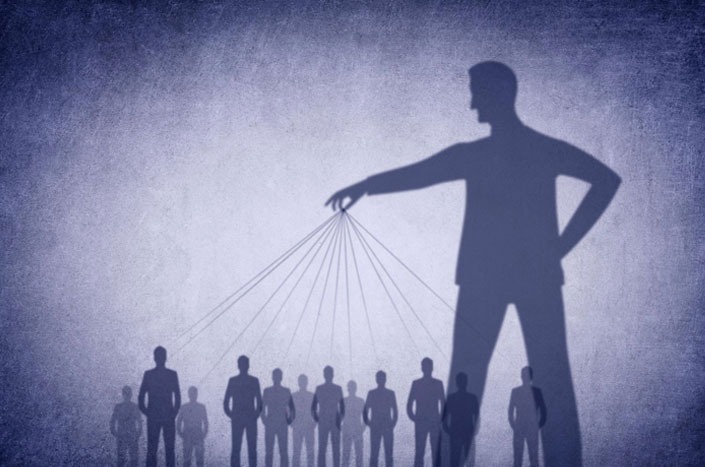
“The Big 3”: ESG & DEI’s Puppet Masters

When it comes to tracing the roots of so-called Environmental, Social, Governance (ESG) and Diversity, Equity, Inclusion (DEI) requirements, all roads lead back to “The Big Three”: Blackrock, Vanguard, and State Street. Together, this triad of financial behemoths own the majority of stock in 88% of the S&P 500 companies; they own at least 5% of 97.5% of all S&P 500 companies. The influence of The Big Three is pervasive and near-omnipotent. These index funds control about 25% of all stock of every public company in the world. Blackrock manages nearly $10 trillion in assets; Vanguard manages $8 trillion, and State Street has more than $4 trillion — an amount nearly equivalent to the United States GDP, and over three times as much money spent by the United States federal government in all of 2022. Their agenda is not a hidden secret. Blackrock CEO Larry Fink has on numerous occasions admitted to forcing behaviors based on gender and race, and State Street has demanded companies disclose the diversity data of their employees. If companies refuse, State Street has promised to vote against investing in them. This dynamic of consolidated power leads to less market competition. It also allows The Big Three to demand ESG and DEI standards in the marketplace. Conform to their social agenda…or else. Take, for example, energy giant Exxon Mobil: last year, Blackrock, Vanguard, and State Street all supported the replacement of certain Exxon Mobil board members who opposed climate change initiatives. They were replaced with people who promised to make climate change a priority. Similar efforts have been made by Blackrock and State Street to punish the Walmart Board of Directors if they do not adopt similar climate and diversity standards. The stranglehold of The Big Three isn’t limited to the corporate world; they’ve begun to extend their influence to governments as well. Blackrock has already invested hundreds of millions in climate initiatives in third-world countries, making them beholden to the financial giant. Blackrock has likewise pressed its climate and ESG initiatives beyond the third world. Their tentacles recently penetrated New Zealand. The country partnered with Blackrock to ensure a 100% renewable electricity power grid, leaving tens of thousands out of work with new fossil fuel standards ending their occupations, despite the country already running on 82% renewable energy from hydroelectric dams. Blackrock, Vanguard, and State Street not only have an exorbitant amount of power over global markets, but also global culture. Curtailing their reach will require financial and grassroots pushback. Otherwise, their aggressive agendas won’t end with ESG and DEI; they’ll only have just begun.

Blog

Affirming DEI?

As DEI retreats in higher education, its influence continues to grow in corporate America In the wake of the Supreme Court of the United States (SCOTUS) overturning affirmative action in college admissions in late June, there has been a subtle movement away from Diversity, Equity, and Inclusion (DEI) initiatives on many college campuses. Despite the common refrain that ending affirmative action is racist and is deeply unpopular with the American public, it routinely is rejected by American voters across the country. California voters overwhelmingly dismissed overturning the state ban on affirmative action in 2020, with 57% voting to keep the ban in place. Nationally, a supermajority of the American public — close to 70% — oppose considering race in college admissions. The vast majority of colleges and universities condemned the affirmative action decision by the Court and vowed to maintain avenues of factoring race into their admissions process, which is clearly contrary to their stated missions of equality. Harvard, an institution of higher education at the center of the SCOTUS case, has a Mission Statement that declares, “No one should be harmed or denied an equal opportunity to thrive because of their race, sex, ethnicity, sexual orientation, gender identity, national origin, disability, or religion” — a hypocritical statement in direct conflict with the school’s affirmative action policies. In the wake of the SCOTUS decision, numerous institutions have begun to cut back on some of their so-called “diversity, equity, and inclusion” (DEI) initiatives that contradict equal opportunity for all students. The New College of Florida, for example, dissolved its DEI office, as did the University of Arkansas. The University of Missouri, the University of Kentucky, and other schools announced an end to race-based scholarships, seeing them as next in line to be challenged in the courts. But as DEI faces retreat in higher education, its influence continues to grow in corporate America. DEI initiatives across the country have been supercharged in recent years. Following the riots of 2020, major corporations such as Microsoft, JPMorgan Chase, and Goldman Sachs all pledged to enforce racial quotas and meet diversity goals within five years (2025). The corporations exceeded these goals. Microsoft, for example, hit their targets in 2023. Their response? To commit to even more divisive DEI projects. In 2019, financial giant Goldman Sachs committed to racial quotas for new interns, and financial incentives to black and hispanic workers. Tech companies such as Google and Facebook have embraced similar quotas and race-based practices. The Supreme Court decision striking down affirmative action in college admissions marked one step toward re-instituting a nationwide culture in which reward is based on merit rather than race. Whether we as a country continue on this journey in academia and in business remains to be seen.


Blog

Academy Insanity: Christian Toto & the New Oscars Diversity Requirements

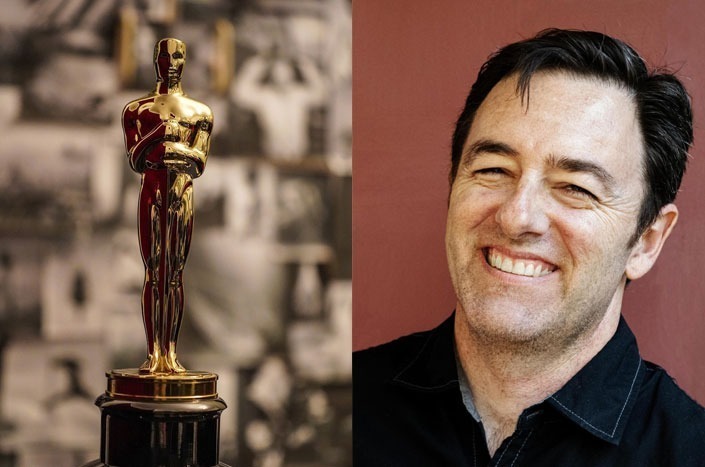
Spurred on by the “#OscarsSoWhite” progressive Twitter pile-on of 2015 and catalyzed during the Black Lives Matter movement of 2020, the Academy Awards has implemented revised Oscar eligibility criteria to include mandated diversity requirements — and the list is quite something to behold. On-screen “at least one of the lead actors must be from an underrepresented racial or ethnic group,” the new rules state. “30% of actors in secondary roles be from underrepresented groups such as LGBT+ and people with cognitive or physical disabilities,” and the plot must “center around an underrepresented group.” Off-screen “the leading producers must have at least two members from an underrepresented group on their staff,” and “six members of the crew/technical team must be from those same underrepresented groups,” and “senior executives on the film must also meet certain thresholds for those underrepresented groups.” The rules even extend to interns! Productions must have “at least two interns from underrepresented groups, and those opportunities must be prioritized” over those in properly represented groups.” How will all of this be enforced? With a literal checklist. Movies will need to submit an “Academy Inclusion Standards form” for major award consideration. And that’s not all: the Diversity Police will also be on the case — the Academy will conduct spot checks and interviews to ensure producers aren’t fudging the numbers on their forms. It’s estimated that of the 95 Best Pictures in the history of the Oscars, over half would not qualify under these new diversity thresholds. Gone with the Wind, Wizard of Oz, Citizen Kane, Casablanca, Singin’ in the Rain, The Sound of Music, The Godfather, Star Wars, Taxi Driver, Goodfellas, and Schindler’s List all would have been ineligible for top honors. Even recent critically acclaimed movies such as 1917 and The Irishman wouldn’t make the cut. “Anything that interrupts the creative process is a potential problem,” film critic and founder of Hollywood in Toto Christian Toto (pictured) told the New Tolerance Campaign. “Some stories may be perfect for an Oscar-worthy presentation, but they may not be told because they don’t align with the approved narratives. We may see an artificial uptick in diversity numbers, but does that include other groups marginalized by Hollywood — conservatives and Christians? Why don’t they get special protection given how they’re ignored or maligned within show business?” Conservatives aren’t the only ones skeptical of the Academy’s new mandates. Richard Dreyfuss, known for his roles in Jaws and American Graffiti, (two movies that also wouldn’t make the cut today) said the new standards “make him want to vomit.” Others haven’t been as outspoken. “Actors are very afraid to speak out against the new diversity rules,” Toto said. “The New York Post’s story on the subject had several industry critics but no one shared their name. Fear is very powerful in Hollywood, and if you’re suspected of being critical of aggressive diversity measures there will be consequences.” All of it makes one wonder: If only some movies receive Oscar consideration, can any objectively be called “Best Picture”?

Past Campaigns

Tell Chase Bank to Stop Attacking Free Speech & Religious Liberty

Chase Bank has some big problems. The massive financial institution refused to even meet with some of its largest investors to discuss the Viewpoint Diversity Business Index, the first comprehensive measure of corporate respect for free speech and religious liberty. But that’s not all: Chase appears to be actively discriminating against groups that don’t agree with the banking giant’s cultural agenda. Chase closed the account of the National Committee for Religious Freedom less than a month after it was opened. The nonprofit, chaired by former U.S. Senator and Kansas Governor Sam Brownback, was informed that the organization had to reveal its donor list in order for the account to be restored. Make no mistake: If Chase can do this to a former governor and United States Senator, they can do it to you, too. NTC is proud to partner with the National Center for Public Policy Research to push back against these outrageous actions. Demand answers from CEO Jamie Dimon and JPMorgan Chase senior leadership!       [Photo credit: Rebecca Barray, CC BY-NC-SA 2.0, via Flickr (cropped)]

Past Campaigns

Shut Down by Amazon Following False Accusations of Racism — Demand Answers

Brandon Jackson came home on May 25 to discover he had been locked out of his Amazon Echo, which controlled many of his electronics — including his lights. Why? A delivery driver claimed he heard racist slurs through the doorbell. Jackson is black, wasn’t home, and has video showing the delivery driver wearing headphones at the time of the incident. Even after showing proof of his innocence to Amazon, it took the company over a week to unlock his devices. This should never have happened in the first place. Taking protective action to guarantee the safety of employees is reasonable; shutting someone out of their own property is not. Demand answers from Amazon CEO Andy Jassy and a promise this will never happen again!

Blog

The Toxic Ten: The Year’s Worst Examples of Shareholder Activism

Corporations have moved dramatically to the left on social and cultural issues over the past decade in America — in some cases by force. Shareholder resolutions have pushed publicly traded companies to put social issues over profits. Any activist holding over $2,000 in stock for a period of at least a year can sponsor a shareholder resolution at a corporation’s annual board meeting. As a result, corporations have been pressed to take positions on everything from abortion to gun control and LGBTQ policies, just to name a few. Although only around 10% of all resolutions pass, they still force companies to concede ground to radical social causes. 2023 in particular has been a year full of extreme shareholder resolutions. Here are ten of the most outrageous: MasterCard was pressured by left-wing shareholders to track gun-related transactions, creating a de facto national firearm database. Read the full story here. Bank of America was pushed by shareholders to release details on how the company would meet the 2030 climate transition target. Only 28% of shareholders voted or the resolution, but it still put the public spotlight on the company, forcing them to commit to other disclosures related to climate and manufacturing. Read the full story here. Johnson & Johnson and The Home Depot were forced by the majority of shareholders to conduct racial equity audits of their respective companies. The vast majority of these shareholder resolutions concern so-called “Diversity, Equity, and Inclusion” (DEI) and climate change. Johnson & Johnson and Home Deport are now required to perform these “equity” audits. Read the full story here. Boeing is now forced by shareholders to support climate reforms the run counter to the financial interests of the company. Activist nonprofits like “As You Sow” are leading the push for similar shareholder resolutions that inject radical social policies into business models. Read the full story here. Exxon Mobil was at the mercy of environment groups that secured passage of resolutions forcing the corporation to undertake cumbersome sustainability and decarbonization efforts, putting the profitability of the corporation at risk. Read the full story here. CNX was met with shareholder resolutions demanding the company adhere to the Paris Climate Agreement and outwardly lobby for its global adoption. The resolution was ultimately defeated, but its consideration included a devastating public relations campaign that damaged the brand. Read the full story here. Jack in the Box, the popular fast food restaurant chain, was made to adopt a resolution requiring the corporation to solely support sustainable — and onerous — packaging sponsored by Green Century Capital Management. Read the full story here. Apple was forced by shareholders to oversee a third-party audit of their racial equity standards, and to go “above and beyond all legal and regulatory matters” to ensure people of color are prioritized for hiring in the name of civil rights. This vague language calls for Apple to discriminate against certain races in the name of “equity.” Read the full story here. Target was the target of shareholder demands to support a racial and gender scorecard published by Arjuna Capital, an investment firm committed to “divest from fossil fuels, promoting gender pay equity, and fighting internet hate speech.” Read the full story here. Disney faced shareholder resolutions calling for the company to publicly support “LGBTQ+” issues and provide a detailed report explaining how it will support “human rights” in Florida. Read the full story here.

Past Campaigns, Top Campaigns

Send a Message to CEOs: Stop Pushing LGBT Marketing on Kids!

No matter your background, faith, or even sexual orientation, there’s one message everyone should be able to agree on when it comes to LGBT marketing by corporate America: leave the kids alone! That’s the message you’ll send to CEOs from coast-to-coast when you add your name to the petition on this page. In the United States, adults have the freedom to live their lives as they wish. At the same time, the perspectives of people of faith should be respected. And when it comes to discussions about sex and gender, parents should be in control. Sadly, boardrooms of businesses across the country are filled with people who feel they know better. They push kids’ books promoting gender confusion, stories about “nonbinary” babies, and instruction encouraging young girls to seek puberty blockers. Sign the petition on this page to tell America’s CEOs to stop pushing LGBT marketing on kids!

Past Campaigns

Tell Walmart to Stop Funding Divisive DEI Training in Public Schools

Walmart’s wokeward drift continues. It’s bad enough the retail giant pushes critical race theory (CRT) trainings on its employees — now, they’re bringing those principles to public schools. The Washington Free Beacon found Walmart supporting so-called “diversity, equity, and inclusion” (DEI) programs at public schools in Bentonville, Arkansas and nearby Fayetteville. Walmart Foundation funding underwrote sessions in which teachers were instructed about “intersectionality,” “microaggressions,” and that “perfectionism” is a form of “white supremacy.” Walmart attempted to wriggle out of responsibility, saying they “did not direct or encourage any specific curriculum around CRT.” They may not have drafted lesson plans, but the company was more than happy to connect education officials with the organizations that did — like the Racial Equity Institute, which teaches that “all our systems, institutions, and outcomes emanate from the racial hierarchy on which the United States was built.” Send a message to Walmart Foundation President Kathleen McLaughlin: stop pushing divisive DEI in public schools! [Photo credit: Mike Mozart of TheToyChannel & JeepersMedia, CC BY 2.0, via Flickr (cropped)]

Blog

Bigger Meaning Behind Bud Light Backlash

It hasn’t been a good month for Bud Light. On April 1, Dylan Mulvaney posted a video announcing Bud Light sent custom beer cans emblazoned with the TikTok star’s face to commemorate “day 365 of womanhood” — the one-year anniversary of Mulvaney coming out as transgender. Bud Light touts itself as “Easy to Drink, Easy to Enjoy,” but many Americans found the Mulvaney partnership hard to swallow. Musician Kid Rock recorded a video blasting a case of Bud Light with a gun. Author Matt Walsh spearheaded a boycott of the brand. And U.S. Senator Ted Cruz told Newsweek he was “hard-pressed to think of an instance where a company understood less about the consumers who actually purchase their product.” On Monday, April 10, Bud Light parent company Anheuser-Busch saw a three percent drop in its stock. Bud Light’s initial response to the controversy? Dead silence. The Twitter account of the beer brand — known for posting multiple times daily — went dark for two weeks. When Budweiser did finally speak up, it was via an effusively patriotic ad in which a narrator proclaims, “This is a story bigger than beer. This is the story of the American spirit.” In that much, Budweiser is right — albeit unintentionally. The lessons from Bud Light’s marketing mishap are far greater than the sum of its parts. The visceral response from everyday Americans wasn’t about hate for Dylan Mulvaney, transphobia, or even Bud Light — it was yet another instance of a major corporation needlessly injecting itself into a culture war, and it was a breaking point for many Americans tired of seeing everything politicized at every turn. This time, the people pushed back.       [Photo credit: Gonzalo Arizpe]

Scroll to Top