Woke Corporate Hypocrisy

Blog

When Going Woke Isn’t Enough: Target CEO Steps Down After 11 Tumultuous Years

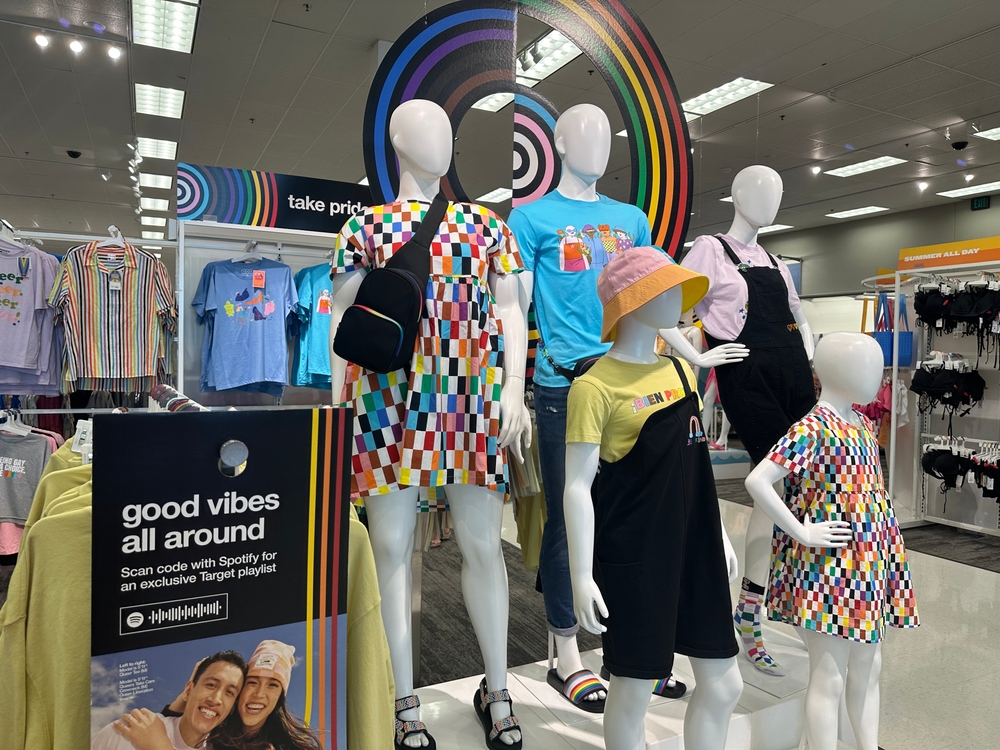
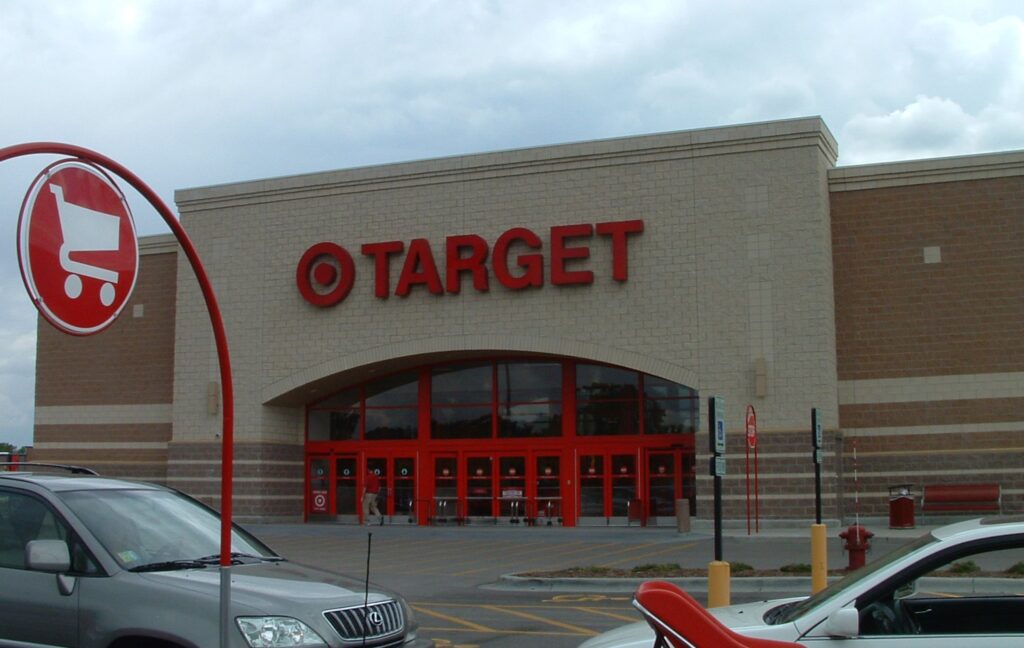
This upcoming February will mark the end of another era for a recovering socially conscious brand. Target Chief Executive Officer Brian Cornell will step down in February 2026, ceding the top post after 11 years to longtime company veteran and Chief Operating Officer Michael Fiddelke. Under Cornell’s leadership, Target once dazzled, earning praise for modern store overhauls, pandemic-era growth, and a beam of corporate prestige. But according to a senior writer at Fortune, “Target reported yet another quarter of weak financial results, with comparable sales down 1.9% and the cheap-chic retailer reaffirmed its expectations that sales will decline by a low single digit percentage this year, projecting a third year in a row of decline.” There is no doubt at this point that the popular retailer is reeling — sliding sales, failed initiatives, and deep cultural divisions have only made Cornell’s departure all but inevitable. A Leader Defined by Ideological Overreach and Backlash Cornell’s tenure is inseparable from Target’s embrace and eventual retreat from deeply polarizing social initiatives. DEI Investment to DEI Retreat: In 2020, Target CEO Brian Cornell said George Floyd’s murder had a personal impact on him and just several months after the murder, Target pledged to increase its Black workforce by 20% throughout the company over three years and take other steps to “advance racial equity.” The following year, Target committed to spending more than $2 billion with Black-owned businesses by the end of 2025. In 2022, the Bullseye-logoed company was honored for its “outstanding commitment to DEI” by the Executive Leadership Council, who is the “preeminent global membership organization for Black current and former CEOs, senior executives,” amongst entrepreneurs, and other leaders. In 2023, Cornell defended Target’s bold commitments to DEI, saying they ‘fueled much of their growth’ over the years. However, his tune quickly changed at the beginning of this year. Target quietly rolled back a broad slate of their diversity, equity, and inclusion goals. In a post online the long running department store openly admitted to halting future surveys that went to the Human Rights Campaign’s Corporate Equality Index and they also said they would conclude their Racial Equity Action and Change (REACH) initiatives this year. The announcement generated strong recoil, including from the granddaughters of a founding family member, who condemned the reversal, describing their personal feelings as “shocked and dismayed.” Nevertheless, Target rightfully surrendered to consumer boycotts, online hysteria, and conservative customer backlash. Pride Merchandise Firestorm: In May 2023, Target’s Pride Collection came under attack for selling “tuck-friendly” items within their “kid’s section.” The resulting boycott triggered major stock dips, “wiping out $10 billion in market value in just ten days and erasing $25 billion in shareholder value over the course of six months, its worst performance and longest losing streak in 23 years.” There were also threats against employees, and store vandalism, which ultimately forced Target to pull back their initial offerings and move displays to the back of some of their stores. The State of Florida and America First Legal joined forces to file a class action lawsuit against the popular retailer for “misleading and defrauding investors over market risks of LGBTQ activism” – litigation that is still playing out in court months later. Just one year later, in Target’s 2024 press release just one day ahead of “Pride Month,” they said their company would only be selling their pride-related collection of products and items in “adult apparel and home and food and beverage” sections of their store. Moreover, since the eye-opening tragedy, in the two years to follow the retail giant has scaled back their pride displays and merchandise. More notably, viral posts online and articles from this past June (2025) show Target had been prioritizing USA-themed apparel over LGBT merchandise during Pride Month. Investor Fraud Lawsuit: Amid DEI pledges coming to an end, shareholders led by the City of Riviera Beach Police Pension Fund in Florida filed suit alleging Target misled them on the financial risks tied to its social policies and ESG commitments. According to early reporting, “The lawsuit said the retailer, CEO Brian Cornell and other officials failed to disclose the risk of consumer boycotts stemming from Target’s Environmental, Social, and Governance and Diversity, Equity, and Inclusion initiatives.” Reuters also noted in their original report that Target’s share price fell 22% on November 20, 2024, wiping out about $15.7 billion of market value. Caught Between Culture Wars: The company has now found itself alienating both ends of the political spectrum — progressive consumers have become upset by recently announced DEI rollbacks, while dedicated conservative customers have become infuriated by “woke” merchandise. The result? A socially conscious brand who successfully racialized division, suffers with plunging sales year after year, and finally pressures their CEO to resign.  A Strategic Pivot or Further Retreat? Even before Cornell’s announced exit, the company’s trajectory was in free fall. According to many media reports, “Target reported a 21% drop in net income in the quarter ended August 2. Sales were down slightly, and the company reported a 1.9% dip in comparable sales – those from established physical stores and online channels. Target has seen flat or declining comparable sales in eight of the past ten quarters including the latest period.” The board’s choice of Michael Fiddelke, a 20-year insider to succeed Cornell signals continuity, not upheaval. Neil Saunders, who serves as the Managing Director of GlobalData Retail said he had mixed feelings about the promotion of Fiddelke, other analysts think the retail veteran may lack the fresh perspective needed to reset Target’s faltering brand connection. New Tolerance Campaign’s Approach At the New Tolerance Campaign, we value consistency, courage, and coalition – not performative virtue signaling. According to their own website, Target deems their core purpose as, “help all families discover the joy of everyday life.” The commitments they outlined are simple: “more for your money, the best shopping experience, a healthy, happy and valued team, a brighter future, ethical business practices.” Simply put, the Target Corporation’s mission, corporate strategy and commitments
Blog

The NFL’s End Zone Sermons Are Driving Fans From The Sport

As an avid enjoyer of pro-football and a yearly fantasy team player, I have watched the National Football League’s (NFL) slide from America’s favorite sport into America’s biggest lecture hall with growing disgust. For the sixth consecutive season, the league has announced it will keep stenciling hollow platitudes in its end zones — messages like “End Racism,” “Stop Hate,” “Choose Love,” and the new addition “Inspire Change.” They say it’s about unity. I say it’s about pandering. And the keyboard warriors they’re pandering to? They don’t even watch football. Football’s magic has always been its ability to bring people together who disagree on almost everything else. You can have political rivals sitting side by side in the stands, screaming in unison when the home team scores. After all, this mission is exactly what the NFL used to sell: a shared cultural space above the fray. But now, the league insists on dragging the fray into the one sacred place millions of people once went to get away from it. Preaching to the Wrong Crowd The NFL is bending over backwards to impress the cancel culture class — the same people who spent years mocking football as too violent, too masculine, or too toxic. These are not the folks packing stadiums on Sunday afternoons, spending all day watching the game with their fantasy cohorts and they’re certainly not buying their favorite player’s jersey to wear every week. In fact, many of them openly disdain the game, the fans, and the culture around it. Yet the NFL caters to them with high-profile gestures that do nothing for the sport’s actual supporters. This is like a steakhouse changing its menu to include plant-based options in order to appease militant vegans all while ignoring the regulars who keep the lights on. And the message to loyal fans couldn’t be clearer: your escape, your tradition, your favorite pastime still comes with a side of moral instruction, whether you asked for it or not. Virtue Signaling Over Victory The league wants to be seen as brave, as leading the charge for justice. But real courage isn’t slapping slogans on the turf. Real courage is doing the hard, unglamorous work that doesn’t get you applause at awards banquets — its funding mentorship programs, supporting at-risk youth, partnering with communities to create opportunity. Those are things that could change lives. Instead, we get “Choose Love” painted in the end zone while players are arrested for assault in the offseason and the league quietly buries concussion data. Instead, we get “Inspire Change” despite multiple players driving their expensive sports cars recklessly through various major cities and suburban communities. What the NFL is doing is hypocrisy dressed up as heroism. The league is using the field to buy social credibility while avoiding the heavy lifting that real change requires. The Fans See Through It Fans aren’t stupid. They know when they’re being sold something useless. They know when the sport they love is being used as a billboard for causes and slogans that have nothing to do with the game. And frankly, they’re tired of it. Sure, there will always be those who say, “What’s the harm? It’s just words painted in the artificial grass.” But if it were really harmless, the league wouldn’t need to make a press release or plant an exclusive story with one of their loyal media partners about it every single year. This is about narrative control, it’s about appeasing the keyboard warriors, it’s about reconciling with the demands of the entertainment industry before they agree to costly advertisement deals and multi-million-dollar sponsorship opportunities. This is all about making sure every touchdown, every camera pan, every highlight reel reinforces a culturally controlled message the league wants you to internalize. The problem isn’t that the messages are overly controversial; it’s that the NFL has decided there’s only one acceptable point of view. That’s not unity – that’s ideological conformity. And it’s exactly the opposite of tolerance. Sports Arenas Aren’t For Political Soapboxes The NFL is supposed to be the great escape. After all, last regular season’s average viewership consisted of 17.5 million viewers. For three hours (at the very least), fans should be able to leave politics, culture wars, and endless media outrage behind. They don’t come to be scolded or converted, rather they come to cheer, to boo, to high-five strangers in the next row. That’s the alchemy that makes sports special. When you turn the game into a political soapbox, you destroy that magic while creating even more division. This is the same league that once threatened to penalize players for wearing custom cleats honoring fallen police officers and victims of September 11th, but now they celebrate political messages as long as they’re in line with leftwing corporate-approved causes. The hypocrisy is staggering. The NFL has made it clear: some messages are welcome, others are not. It’s not about free expression, it’s about the right expression. A Better Way Forward If the NFL truly wants to help, here’s an idea: take the millions you spend on marketing and public relations around these slogans and put them into measurable community impact. Sponsor trades programs in struggling towns. Invest in inner-city athletic facilities. Fund student athlete scholarships. Help rebuild neighborhoods devastated by crime or addiction. Leave the end zones alone. Let the game be the game. Let fans of every background and belief come together without having a political message shoved in their faces. Closing Whistle The NFL’s job is to bring people together through the sport of football. Every time they use the field as a political pulpit, they drive a wedge between fans. They alienate the people who actually keep the league alive. And for what? Applause from people who wouldn’t be caught dead in a stadium? It’s time for the league to stop chasing the approval of the anti-football crowd and start respecting the fans who’ve been there all along. Keep politics out of the end zone. Bring back the game we came

Blog

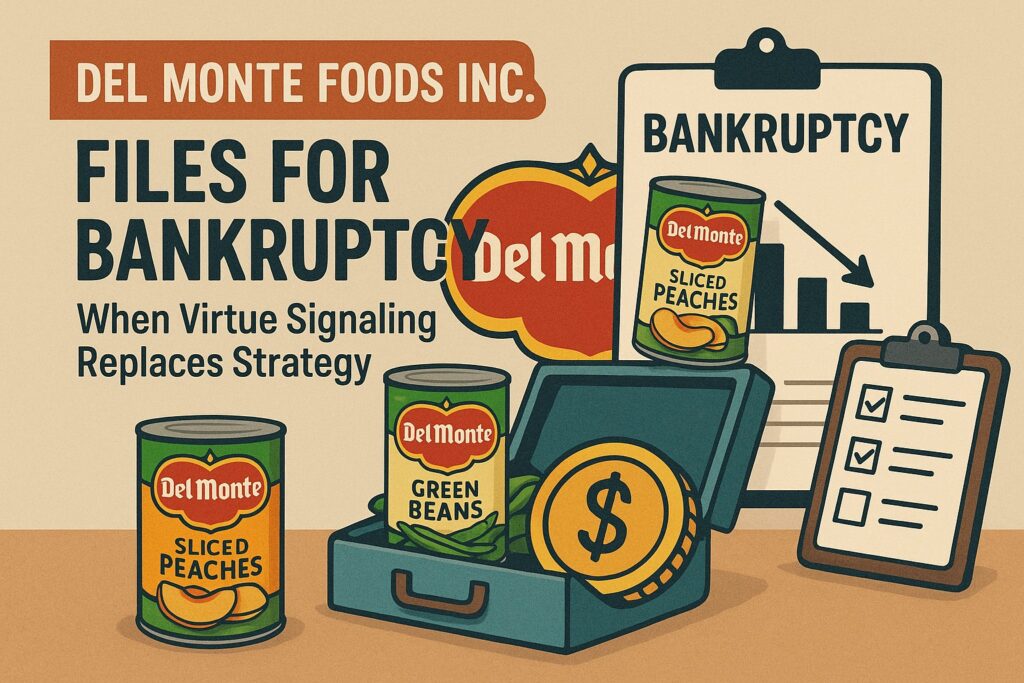
Del Monte’s Collapse: How ESG, DEI, and “Belonging” Couldn’t Save a 138-Year-Old Brand

On July 1, 2025, Del Monte Foods Inc., one of America’s most iconic food brands, filed for Chapter 11 bankruptcy after 138 years in business. Once a household staple, Del Monte is now seeking protection from creditors as it desperately looks for a buyer to keep its legacy alive. But behind the mainstream media headlines about restructuring lies a deeper, more telling story: a corporate culture that traded business fundamentals for ideological activism. And now, the bill has come due. Del Monte’s collapse isn’t just about financial missteps, rather it’s a warning shot to every socially conscious brand or organization prioritizing performance theater over performance metrics. A Perfect Score… And a Perfect Disaster In the 2023–2024 business cycle, Del Monte proudly earned a perfect score (100/100) on the political left’s cherished “Human Rights Campaign (HRC) Foundation’s Corporate Equality Index,” recognizing the canned vegetable and fruit company’s LGBTQ+ workplace policies and extensive diversity, equity, and inclusion (DEI) initiatives. Del Monte even issued a press release celebrating their recognition. To achieve this accolade, Del Monte doubled down on policies around “Diversity, Inclusion, and Belonging” (DIB)—a rebranded form of DEI aimed at not just representation but identity-centered workplace restructuring. From equity training and internal affinity groups to executive-level DEI oversight, Del Monte placed social engineering at the heart of its longstanding brand. And yet, just months later, that same company is now filing for Chapter 11 bankruptcy and desperately searching for a buyer. Know Your Audience One of the top reasons cited by the media for Del Monte Foods’ struggles is that canned food has simply become less popular in the age of the foodie, and that stands to reason. Del Monte Foods is focused on canned and packaged produce, and is completely separate from Fresh Del Monte, which sells fresh items. But it makes Del Monte’s choices even more baffling. The small number of liberal elites who are impressed by DEI programs and HRC accolades are also the type who post farmers’ market selfies and wouldn’t be caught dead cooking with canned green beans. While Del Monte’s efforts may have earned them some points with investors, the substantial amounts of time and money they spent on these programs arguably did nothing to help sell their products. Del Monte appears to have forgotten who they were serving after all. The Disappearing ESG Page Lest you think this was all about principle for Del Monte, their efforts are already starting to disappear from view. Visit Del Monte’s website and scroll to the bottom. You won’t find a tab that highlights their commitment to environmental, social and governance (ESG). However, if you click the “careers” tab and scroll down you’ll find a tab labeled “ESG”. Click it, and you’re greeted with a dead end. Although we reached out to company representatives and are awaiting their comment as to why this phenomenon occurs, this kind of digital vanishing act might not just be a glitch, but it could be symbolic. While the ESG tab is nowhere to be found on their homepage, and it mysteriously leads to nowhere from their “careers” page, a bit of digging reveals that Del Monte’s 2024 ESG Report and other similarly published green communications are still quietly housed under its “sustainability reports” section, buried a layer deeper and harder to find. And even from their main website, Del Monte’s current sustainability section hosted in a small rectangular box on their homepage doesn’t highlight their flagship environmental commitments that their President and CEO Greg Longstreet and ESG Senior Manager Molly Laverty once bragged about to the media. Instead, you have to scroll all the way to the bottom of the “sustainability” webpage and click the “sustainability reports” link in order to find their most recent ESG report and latest work toward their 2022 commitment to net-zero emissions by 2050. Why the sudden demotion of a once-celebrated pillar of their corporate identity? Perhaps it’s the recent change in political headwinds. Or perhaps it’s because when companies hit hard times, it’s often their ideological indulgences they try to scrub or conceal first, especially when those indulgences may have contributed to their storied downfall. Whatever the reason, their actions suggest calculation rather than principles. When Virtue Signaling Replaces Strategy According to Del Monte’s website, their purpose is to be “a leading producer, distributor and marketer of premium quality, primarily branded, plant-based packaged food products that are healthy, tasty, convenient and satisfy the needs of today’s consumers.” Moreover, the company’s stated core values are centered around what they call, “CHOICE,” or the enablement of “a collaborative and innovative culture that brings the best out of our teammates to achieve widespread success.” However, Del Monte’s focus over the last few years, if not longer, has shown that they decided to betray their own stated values in order to virtue signal rather than create greater value. Instead of focusing on core strengths like product innovation, supply chain resilience, or responding to evolving consumer preferences, Del Monte went all in on symbolic gestures. They pledged allegiance to ESG frameworks, sought top billing on DEI or DIB indexes, and used corporate resources to burnish a progressive public image, all while their financial health quietly deteriorated… until now. This is not to suggest that diversity or sustainability are inherently bad. But when these initiatives replace — and don’t supplement – sound business strategy, they become resource draining liabilities. At the end of the day, a perfect HRC, ESG, or DEI “score” didn’t save Del Monte Foods Inc. from a financial collapse. It may have even accelerated it. Now, when you visit the ESG page buried on the careers page, you get this fitting error page. “Oops!” indeed. Why the New Tolerance Campaign Is Watching At the New Tolerance Campaign, our mission is to demand accountability from institutions that preach one thing while practicing another. Del Monte Foods Inc. isn’t alone. Across America, we’re watching other socially conscious companies, Ivy League universities, and nonprofits race to check every progressive box—only to

Active Campaigns

Tell Eventbrite: Stop Using the SPLC List to Discriminate

Should Focus on the Family, Turning Point USA, and PragerU be turned down from using popular event management software Eventbrite because a left-wing smear factory added them to a list?  That’s a very real possibility now that the Southern Poverty Law Center (SPLC) has added all three groups to the latest version of its hate map next to groups like the KKK. Eventbrite announced in 2017 that the SPLC’s hate map was one of its top resources for deciding who to deplatform.  That was bad then, but it’s even worse now. Focus on the Family, TPUSA, and PragerU are major Christian or conservative organizations. And their stances have not materially changed. What has changed is that the SPLC is no longer even pretending to be unbiased. If Eventbrite doesn’t want to discriminate against Christians and conservatives, it must disavow the SPLC and declare that non-hateful groups on the map are allowed to use its services. Please sign the petition calling on Everbrite to do the right thing!

Past Campaigns

Yeti Must Recognize Viewpoint Diversity

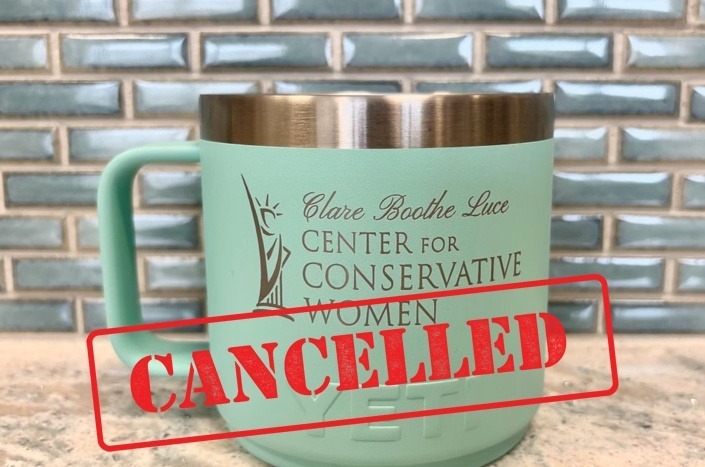
Don’t say “conservative” — at least where Yeti is involved. When the Clare Boothe Luce Center for Conservative Women (CBLCCW) in Virginia placed what they thought would be a simple order of promotional mugs from the cooler manufacturer, their order was denied. “Yeti is unable to customize products with text or logos that are licensed, copyrighted, profane, or political in nature,” Yeti said in an email. Troubling hypocrisy — especially since… This was a reorder — Yeti had fulfilled the same order in the past without any problem! CBLCCW received a message confirming that their order had been accepted before it was denied. There are instances of Yeti gladly accepting business from left-leaning “political” groups and organizations. Stop the hypocrisy! Send an email to Yeti CEO Matt Reintjes and senior executives telling them to change course, fill the order, and welcome viewpoint diversity among their customers!

Blog

New Tolerance Campaign Announces 2024 “Worst of the Woke” Awards

Super Bowl LVIII, The Olympics, Harvard, and More Among the Top 10 Worst Woke Offenders of the Year Washington, DC — Today the New Tolerance Campaign (NTC), a grassroots watchdog organization, unveiled its fourth annual “Worst of the Woke” Awards — a look back at the year’s most outrageous headline-grabbing instances of woke-run-wild in the United States. In 2024, 10 institutions went to extremes pressing a woke agenda on a weary public: DEI in Star Wars, drag queens at The Olympics, “nonbinary” toys and more all made the cut. See the full list of “Worst of the Woke” Award winners — as well as this year’s “Champion of Tolerance” — below:   Award Winner: “The Acolyte”* Reason: Disney hoped for a hit but ended up with a messy miss following the disastrous rollout of “The Acolyte.” The Star Wars spinoff crashed and burned, cancelled after only one season for the most predictable reason: it refused to stay true to Star Wars lore and instead sought to shoehorn as much DEI into every episode as possible: an all-lesbian coven of Force Witches lamenting the galaxy not accepting “women like us,” asking an alien for its pronouns, a pronounced emphasis on race and more all featured in the show. Series creator Leslie Headland even went on-record, stating that the inclusion of “queer” communities in the program was deliberate because it “would be natural” in an all-female community.   Award Winner: Super Bowl LVIII Reason: With more than 123 million viewers every year, few things unite America like the Super Bowl — but not this year. The NFL spoiled the fun with divisive woke posturing, presenting two separate national anthems before the big game: a “black national anthem” and one for everyone else.   Award Winner: The Olympics Reason: The Paris Olympics managed to anger Christians, conservatives, and anyone with good taste in dancing. The opening ceremony of the global athletic event began with a tableau of drag queens that more than a few people felt mocked “The Last Supper”; the cross-dressing star at the center of the performance who called herself “Olympic Jesus” only exacerbated the outrage.   Award Winner: Harley-Davidson Reason: Harley Davidson had a rock-solid, badass brand…and then DEI came along. A video unveiled on X showed the company’s CEO Jochen Zeitz speaking at a conference in 2020 in which he called himself “the sustainable Taliban” and asserted Harley Davidson was “trying to take on traditional capitalism and trying to redefine it.” After the uproar, Zeitz issued a public statement denouncing DEI and declaring the bike builder would pull back from the woke brink, ending its participation with the odious “Corporate Equality Index” pushed by recognized hate group the Human Rights Campaign.   Award Winner: Columbia Reason: During a three-week fiasco, the administration of Columbia University was paralyzed in the face of rabidly antisemitic and increasingly violent conduct: students took over the campus’s famed Hamilton Hall, barricaded the entrances, and hung a “Free Palestine” banner from a window. The inmates were running the asylum at New York City’s Ivy League school, with students issuing a list of wild demands that included a “complete divestment” from all Israel-related businesses and amnesty from disciplinary actions for protesting students. Columbia’s pushback? An email declaring that bringing in police “at this time” would be counterproductive. Things got so hot that Columbia ended up canceling its university-wide commencement ceremony.   Award Winner: Harvard Reason: Following the unceremonious resignation of university president Claudine Gay under allegations of rank plagiarism, America’s premier Ivy League institution presented a case study in emotional fragility in the aftermath of Donald Trump’s victory in the 2024 presidential election. Harvard professors cancelled classes for two days to allow their students “space to process the election.” The school’s Institute of Politics distributed conciliatory pastries and sweets all day on November 6. And quizzes in the “Intermediate Microeconomics” class were declared optional henceforth as a reprieve from post-election trauma.   Award Winner: WPATH Reason: Hippocratic Oath be damned! The World Professional Association for Transgender Health (WPATH) came under fire for its role in one of the most alarming medical scandals of our time. Behind closed doors, doctors affiliated with WPATH, who swore an oath to “do no harm,” privately discussed how sex-change procedures for minors are experimental, untested, and often devastatingly painful. The admissions directly contradicted their public-facing advocacy for the treatments, leaving families betrayed and children’s bodies permanently altered.   Award Winner: Mattel Reason: The company behind Barbie pushed the boundaries of political correctness with the release of “the world’s first gender-neutral doll.” The toys, marketed as “gender-inclusive,” are designed to be “a boy, a girl, neither, or both.” Mattel hailed the launch as a step toward greater inclusivity, but the move sparked pushback among parents and child-development experts.   Award Winner: Penzeys Spices* Reason: Once crowned “America’s Wokest Company,” Penzeys Spices stirred the pot yet again this year. The seasoning shop is known for promotional events such as “Republicans Are Racists Weekend” and for recommending their customers “send the Jewish people in your life…a photo of a couple sleeping bags up in your attic with the message that you will always have a place for them.” In 2024 the company sparked widespread outrage and calls for boycotts after their owner published an essay on the business’s website slamming the GOP. Of all places for Democratic presidential nominee Kamala Harris to deliver remarks about ending “divisiveness,” she chose this one?   Award Winner: Jaguar Reason: Luxury carmaker Jaguar rolled out a bizarre ad in December that left audiences scratching their heads: a commercial filled with androgynous models and completely devoid of cars. To make matters worse, the auto manufacturer literally took the jaguar out of Jaguar, erasing the iconic big cat from its logo. Critics called the company “Bud Light 2.0.” X owner Elon Musk mockingly asked the company “Do you sell cars?” And conservative parliament member Nigel Farage predicted the UK brand “will now go bust.”   2024 CHAMPION OF TOLERANCE  In

Blog

Is DEI about to DIE?

Big brands and universities have been rolling back DEI programs. Is it part of a bigger trend? The divisive Diversity, Equity, and Inclusion (DEI) movement has taken a hit — but is it knocked out?  In recent weeks, grassroots action has pushed major corporations and universities to backtrack on their DEI initiatives. Some recent highlights: Tractor Supply Company was first on the chopping block. In a statement released on June 27, Tractor Supply responded to customers disappointed with DEI with an assertion that, going forward, the company will cease to participate in the radical LGBTQ Human Rights Campaign’s (HRC) deceptively titled “Corporate Equality Index,” refocus employee engagement on professional development, and eliminate all DEI roles in the company. Molson Coors joined in short order after conservative activist and filmmaker Robby Starbuck messaged Coors executives pledged to expose the company’s woke workplace policies. Coors decided announced the suspension of all DEI trainings, ended the practice of tying compensation to “diversity,” and also terminated involvement with the HRC “Corporate Equality Index.” Starbuck was set similarly expose Jack Daniel’s Whiskey, but before he could go public Brown-Forman Corporation (the parent company of Jack Daniel’s) rolled back their DEO programs, saying they will no longer tie incentives to diversity benchmarks, but job performance instead (what a concept!). Brown-Forman, too, ended their participation in the HRC “Corporate Equality Index.” Starbuck struck again at auto manufacturer Ford, which soon released a statement saying that they would still celebrate diversity, but would no longer use quotas, conduct DEI trainings, and also stop providing data to the HRC “Corporate Equality Index.” Harley-Davidson faced backlash once their core customer base learned of its tone-deaf DEI commitments. The motorcycle manufacturer posted a public statement saying, “we have not operated a DEI function since April 2024, and we do not have a DEI function today.” Harley-Davidson also announced the end of hiring and supply spending quotas and a commitment to focus on professional development, rather than DEI. Over in academia, universities retreated from the DEI agendas they once proudly proclaimed. The University of North Carolina Wilmington (UNCW) restructured their DEI department after their board of governors cut DEI-specific positions in June. Chancellor Aswani K. Volety announced UNCW had closed its Office of Institutional Diversity and Inclusion (OIDI) and eliminated its chief diversity officer position — but the school also stated it would be moving OIDI cultural centers into the office of Student Affairs and repositioning faculty members into other positions on the campus. Did UNCW end DEI or just shuffle the deck? On August 20, the University of Nebraska-Lincoln (UNL) disbanded their Office of Diversity and Inclusion. In an email to employees, Chancellor Rodney Bennett said that this decision was made “after considerable reflection and a thorough review of both the national landscape and the specific needs of our institution.” UNL will be “reimagining” how they approach DEI on campus but will no longer be taking the centralized approach pushed by the woke left. After Virginia Governor Glen Younkin requested to view DEI instruction at George Mason University, the school announced that students would no longer be required to take DEI courses to graduate. A Youngkin spokesman said the governor “had heard concerns from parents and students about ‘a thinly veiled attempt to incorporate the progressive left’s groupthink on Virginia’s students.’” The university’s new DEI rules were set to go into effect during the fall 2024 semester, but the school decided to delay the implementation to allow their Board of Visitors to vote on the curriculum change. It is unclear how the board will vote and if the DEI requirement is truly gone. All in all, DEI initiatives at universities and corporations are being pushed out by some and redefined by others. Do these developments point to DEI in decline? Only time will tell.

Blog

Color Wars

Major brands are discovering there’s no easy way to dial back Pride Month politics! Corporations having second thoughts about aggressive LGBTQ marketing during “Pride Month” are learning a difficult lesson: when it comes to trying to disentangle your brand from cultural issues, you’re damned if you do and damned if you don’t. Just ask Bud Light and Target — the fallout from last year was detrimental to both companies’ revenue and both are still recovering from consumer pushback. Last year Target, the national retail chain, decided to display LGBTQ Pride merchandise in their stores and received extreme backlash from conservatives over the display. Target’s market value was over 74 billion before the displays were put up and fell over 15.7 billion during the backlash. This year, Target responded to conservative activists’ concerns by giving its Pride displays less prominent placement and removing it from some stores entirely. In previous years, Target adopted a rainbow-themed version of its logo on their social media platforms in June; this year they decided against it. Bud Light, under the ownership of Anheuser-Busch, continues to face challenges following last year’s conservative backlash sparked by a social media campaign featuring transgender influencer Dylan Mulvaney. This year they, too, decided against embracing the rainbow logo during pride month. And it’s not just Bud Light and Target — this month numerous other big brands decided to decline LGBTQ-themed logos including Microsoft, Coca-Cola, IBM, and Google. “Ever since Target and Bud Light had their fiascos last year, a tremendous number of brands have decided it would be much better to sit on the sidelines and let this sort itself out,” Pink Media President Matt Skallerud told USA Today. As public disagreement over Pride prominence in marketing continues, companies are finding themselves in a bind with the realization that not everyone in their consumer base agrees with progressive values. Even worse: they’re discovering that once they’ve set precedent by engaging in social issues marketing in the past, it’s difficult to disentangle their respective brands once the door has been opened. As Managing director of GlobalData Neil Saunders said: “If you promote Pride, some people will be unhappy with it. If you don’t promote Pride, some people will be unhappy about that. It’s not a battle you can win completely, which is why some retailers and brands are taking a middle-of-the-road approach and keeping it moderate.” Of course, none of these companies would be facing this conundrum if they avoided wading into politics in the first place. Any solution to their current quagmire will require a reset that focuses on what should matter the most: the customer.

Press Releases

New Tolerance Campaign Announces 2023 “Worst of the Woke” Awards

Amazon, Bud Light, the Academy Awards, and More Among Top 10 Worst Woke Offenders of 2023 Nonprofit watchdog the New Tolerance Campaign (NTC) has released its third annual “Worst of the Woke” list — a look back at the year’s most outrageous and disappointing examples of woke culture gone wild. NTC’s 2023 roundup features the top 10 institutions that tried to foist woke politics onto the weary public, with leaders across diverse industries — from retail to entertainment to finance — landing on the list. This year’s theme? Backlash from fed-up consumers. Consider, for example, the massive boycott that led the CEO of Target to admit that the retailer’s woke virtue signaling caused its first quarterly sales drop in six years. Or the fans that catapulted Jason Aldean’s “Try That in a Small Town” to the top of the charts after Country Music Television pulled it off the air. “In 2023, mainstream institutions leveraged everything from books to beer to promote their woke agendas,” said NTC president Gregory T. Angelo. “However, this year saw a tidal wave of consumers using their wallets and voices to push back against the woke mob, with staggering results. Americans looking for a New Year’s resolution should pledge to keep fighting back against the woke invasion of our country.” Check out NTC’s top 10 worst woke offenders — and one “Champion of Tolerance” — below:   Award Winner: Bud Light / Anheuser-Busch  Reason: For decades, Bud Light had bragging rights as America’s best-selling beer — until April, when an ill-advised marketing campaign with transgender influencer Dylan Mulvaney went viral for all the wrong reasons. Bud Light’s core customer base felt abandoned, and in turn they abandoned the brand. A sustained boycott led to sales falling a whopping 17%. Then, after Anheuser-Busch executives expressed remorse for the promotion, the Human Rights Campaign, an LGBTQ lobbying organization, stripped the company of its 100% rating as a “Best Place to Work for LGBTQ+ Equality.” Anheuser-Busch’s attempt at virtue signaling made them everyone’s enemy. Will the brand ever recover?   Award Winner: Target  Reason: Retail giant Target hasn’t been shy about marketing to LGBTQ consumers during “Pride Month” in June, but this year, after word spread that the brand was pushing “pride-themed” clothing for babies and kids, shoppers drew the line. In May, CEO Brian Cornell made the audacious assertion that pushing divisive social issues at the company is “the right thing for society”; by August he was explaining to upset investors that the company’s dalliance with social issues led to a “negative reaction” from consumers. Target experienced its first quarterly drop in sales in six years.   Award Winner: Bank of America Reason: Financial giant Bank of America went “full woke” in 2023, instituting race-based home financing requirements and denying loans to gun manufacturers and the fossil fuel industry. If that wasn’t enough, the company implemented a work reeducation program that insists America is a “racialized society” and encourages employes to be “woke at work.”   Award Winner: The Academy Awards Reason: The Academy Awards implemented onerous “inclusion” standards for filmmakers and movie studios to abide by if they wish to be eligible for “Best Picture” honors. The list is quite something to behold. Quotas that demand that “at least one of the lead actors must be from an underrepresented racial or ethnic group.” In addition, “30% of actors in secondary roles be from underrepresented groups such as LGBT+ and people with cognitive or physical disabilities,” and the plot must “center around an underrepresented group.” It’s estimated that of the 95 Best Pictures in the history of the Oscars, over half would not qualify under these new thresholds. Gone with the Wind, Wizard of Oz, Citizen Kane, Casablanca, Singin’ in the Rain, The Sound of Music, The Godfather, Star Wars, Taxi Driver, Goodfellas, and Schindler’s List all would have been ineligible for top honors. Even recent critically acclaimed movies such as 1917 and The Irishman wouldn’t make the cut.   Award Winner: Country Music Television Reason: Crime has run rampant in America’s cities. Enter country singer Jason Aldean, who wrote “Try That in a Small Town” to contrast the values gap between metropolitan and rural America. After race scolds slammed the song for being a “pro-lynching” anthem, Country Music Television folded fast and yanked the music video off the air. Despite the ban, “Try That in a Small Town” went on to become a #1 hit on the Billboard Hot 100.   Award Winner: Southern Poverty Law Center  Reason: The Southern Poverty Law Center (SPLC), long known for frivolously flagging groups as “extremists,” was suddenly silent when Hamas terrorists slaughtered more than 1,200 Jewish civilians on October 7 in the worst mass-killing of Jews since the Holocaust. The group shrugged off critics, claiming that it was “outside of our purview and expertise to comment on international events” — despite loudly issuing statements on international events in the past. When CEO Margaret Huang finally spoke up nearly a month later, the schizophrenic statement barely touched on the attack, striking an “All Lives Matter” tone. Remember when we were told saying that was offensive?   Award Winner: Puffin Books  Reason: Wokeness rewrites history to fit political ends. That was literally the case this year, when Puffin Books announced it rewrote “controversial” elements of long-established Roald Dahl children’s classics such as Charlie & The Chocolate Factory, and Matilda. An “enormously fat” boy became simply “enormous,” “Cloud-Men” were now “Cloud-People.” In some cases, entire paragraphs were inserted into books that Dahl had never written. After a public outcry and harsh critiques from literary leaders, the company announced it would continue to publish the original texts.   Award Winner: Amazon  Reason: The internet shopping giant proved that “Big Brother” is closer than you may think. After an Amazon employee claimed to hear a racist remark while making a delivery, the company shut down the owner’s smart home. The kicker? The homeowner is black, wasn’t home, and has video showing the delivery driver wearing headphones at the time of the incident. Even after showing proof of his innocence to Amazon, it

Past Campaigns

BLM Supports Terrorism. Corporations Must Stop Supporting BLM

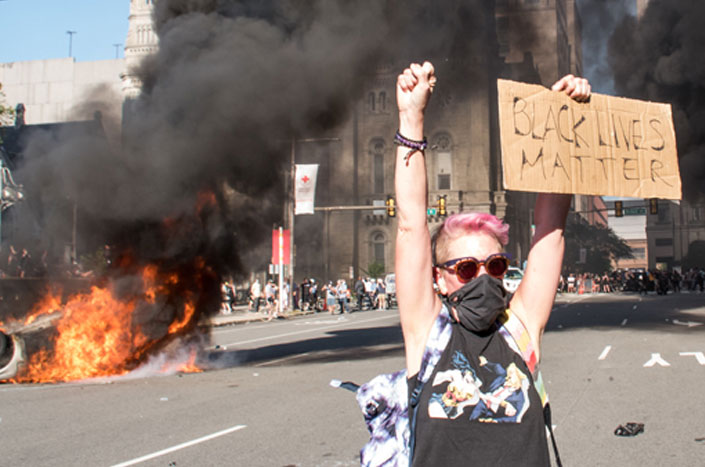
Throughout the summer of 2020, corporations were falling all over themselves to proudly proclaim their “anti-racism” and financial backing of Black Lives Matter (BLM), a radical progressive movement founded to “disrupt the Western-prescribed nuclear family structure” and encourage Americans to view one another first and foremost by the color of their skin. All that is bad enough, but after BLM Chicago posted on X in support of the Hamas terrorist attacks that killed over 1,200 Jewish civilians in Israel on October 7, corporate backing of BLM needs to end now. Some brands, like Coca-Cola, have already scrubbed any mention of BLM support from their websites and social media. Dozens of others have not, including Amazon, Dove, DoorDash, AirBnB, and more. Sign the petition — tell CEOs to stop supporting Black Lives Matter and condemn BLM’s chilling cheering of terrorist slaughter! [Photo credit: Joe Piette, CC BY-NC-SA 2.0 DEED, via Flickr (cropped)]

Scroll to Top