DEI

Blog

When Going Woke Isn’t Enough: Target CEO Steps Down After 11 Tumultuous Years

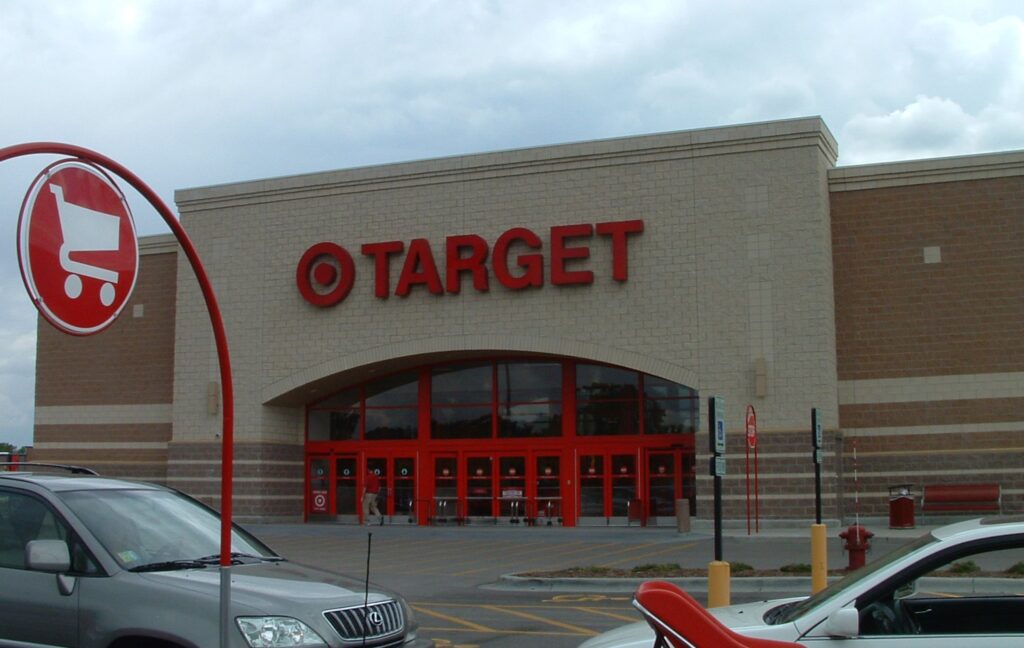
This upcoming February will mark the end of another era for a recovering socially conscious brand. Target Chief Executive Officer Brian Cornell will step down in February 2026, ceding the top post after 11 years to longtime company veteran and Chief Operating Officer Michael Fiddelke. Under Cornell’s leadership, Target once dazzled, earning praise for modern store overhauls, pandemic-era growth, and a beam of corporate prestige. But according to a senior writer at Fortune, “Target reported yet another quarter of weak financial results, with comparable sales down 1.9% and the cheap-chic retailer reaffirmed its expectations that sales will decline by a low single digit percentage this year, projecting a third year in a row of decline.” There is no doubt at this point that the popular retailer is reeling — sliding sales, failed initiatives, and deep cultural divisions have only made Cornell’s departure all but inevitable. A Leader Defined by Ideological Overreach and Backlash Cornell’s tenure is inseparable from Target’s embrace and eventual retreat from deeply polarizing social initiatives. DEI Investment to DEI Retreat: In 2020, Target CEO Brian Cornell said George Floyd’s murder had a personal impact on him and just several months after the murder, Target pledged to increase its Black workforce by 20% throughout the company over three years and take other steps to “advance racial equity.” The following year, Target committed to spending more than $2 billion with Black-owned businesses by the end of 2025. In 2022, the Bullseye-logoed company was honored for its “outstanding commitment to DEI” by the Executive Leadership Council, who is the “preeminent global membership organization for Black current and former CEOs, senior executives,” amongst entrepreneurs, and other leaders. In 2023, Cornell defended Target’s bold commitments to DEI, saying they ‘fueled much of their growth’ over the years. However, his tune quickly changed at the beginning of this year. Target quietly rolled back a broad slate of their diversity, equity, and inclusion goals. In a post online the long running department store openly admitted to halting future surveys that went to the Human Rights Campaign’s Corporate Equality Index and they also said they would conclude their Racial Equity Action and Change (REACH) initiatives this year. The announcement generated strong recoil, including from the granddaughters of a founding family member, who condemned the reversal, describing their personal feelings as “shocked and dismayed.” Nevertheless, Target rightfully surrendered to consumer boycotts, online hysteria, and conservative customer backlash. Pride Merchandise Firestorm: In May 2023, Target’s Pride Collection came under attack for selling “tuck-friendly” items within their “kid’s section.” The resulting boycott triggered major stock dips, “wiping out $10 billion in market value in just ten days and erasing $25 billion in shareholder value over the course of six months, its worst performance and longest losing streak in 23 years.” There were also threats against employees, and store vandalism, which ultimately forced Target to pull back their initial offerings and move displays to the back of some of their stores. The State of Florida and America First Legal joined forces to file a class action lawsuit against the popular retailer for “misleading and defrauding investors over market risks of LGBTQ activism” – litigation that is still playing out in court months later. Just one year later, in Target’s 2024 press release just one day ahead of “Pride Month,” they said their company would only be selling their pride-related collection of products and items in “adult apparel and home and food and beverage” sections of their store. Moreover, since the eye-opening tragedy, in the two years to follow the retail giant has scaled back their pride displays and merchandise. More notably, viral posts online and articles from this past June (2025) show Target had been prioritizing USA-themed apparel over LGBT merchandise during Pride Month. Investor Fraud Lawsuit: Amid DEI pledges coming to an end, shareholders led by the City of Riviera Beach Police Pension Fund in Florida filed suit alleging Target misled them on the financial risks tied to its social policies and ESG commitments. According to early reporting, “The lawsuit said the retailer, CEO Brian Cornell and other officials failed to disclose the risk of consumer boycotts stemming from Target’s Environmental, Social, and Governance and Diversity, Equity, and Inclusion initiatives.” Reuters also noted in their original report that Target’s share price fell 22% on November 20, 2024, wiping out about $15.7 billion of market value. Caught Between Culture Wars: The company has now found itself alienating both ends of the political spectrum — progressive consumers have become upset by recently announced DEI rollbacks, while dedicated conservative customers have become infuriated by “woke” merchandise. The result? A socially conscious brand who successfully racialized division, suffers with plunging sales year after year, and finally pressures their CEO to resign.  A Strategic Pivot or Further Retreat? Even before Cornell’s announced exit, the company’s trajectory was in free fall. According to many media reports, “Target reported a 21% drop in net income in the quarter ended August 2. Sales were down slightly, and the company reported a 1.9% dip in comparable sales – those from established physical stores and online channels. Target has seen flat or declining comparable sales in eight of the past ten quarters including the latest period.” The board’s choice of Michael Fiddelke, a 20-year insider to succeed Cornell signals continuity, not upheaval. Neil Saunders, who serves as the Managing Director of GlobalData Retail said he had mixed feelings about the promotion of Fiddelke, other analysts think the retail veteran may lack the fresh perspective needed to reset Target’s faltering brand connection. New Tolerance Campaign’s Approach At the New Tolerance Campaign, we value consistency, courage, and coalition – not performative virtue signaling. According to their own website, Target deems their core purpose as, “help all families discover the joy of everyday life.” The commitments they outlined are simple: “more for your money, the best shopping experience, a healthy, happy and valued team, a brighter future, ethical business practices.” Simply put, the Target Corporation’s mission, corporate strategy and commitments

Blog

Del Monte’s Collapse: How ESG, DEI, and “Belonging” Couldn’t Save a 138-Year-Old Brand

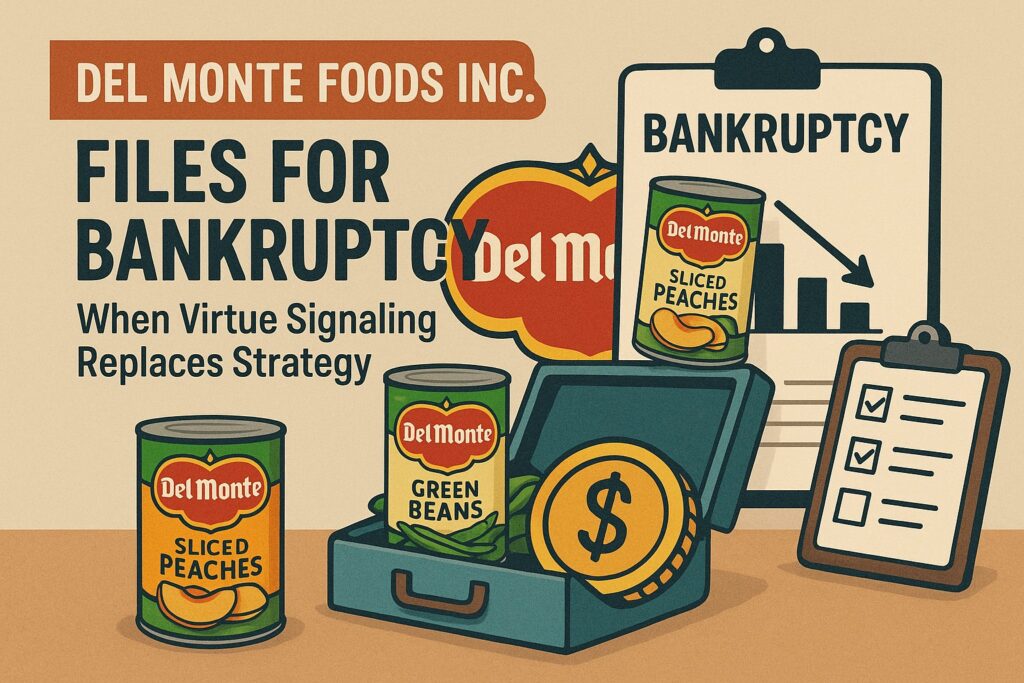
On July 1, 2025, Del Monte Foods Inc., one of America’s most iconic food brands, filed for Chapter 11 bankruptcy after 138 years in business. Once a household staple, Del Monte is now seeking protection from creditors as it desperately looks for a buyer to keep its legacy alive. But behind the mainstream media headlines about restructuring lies a deeper, more telling story: a corporate culture that traded business fundamentals for ideological activism. And now, the bill has come due. Del Monte’s collapse isn’t just about financial missteps, rather it’s a warning shot to every socially conscious brand or organization prioritizing performance theater over performance metrics. A Perfect Score… And a Perfect Disaster In the 2023–2024 business cycle, Del Monte proudly earned a perfect score (100/100) on the political left’s cherished “Human Rights Campaign (HRC) Foundation’s Corporate Equality Index,” recognizing the canned vegetable and fruit company’s LGBTQ+ workplace policies and extensive diversity, equity, and inclusion (DEI) initiatives. Del Monte even issued a press release celebrating their recognition. To achieve this accolade, Del Monte doubled down on policies around “Diversity, Inclusion, and Belonging” (DIB)—a rebranded form of DEI aimed at not just representation but identity-centered workplace restructuring. From equity training and internal affinity groups to executive-level DEI oversight, Del Monte placed social engineering at the heart of its longstanding brand. And yet, just months later, that same company is now filing for Chapter 11 bankruptcy and desperately searching for a buyer. Know Your Audience One of the top reasons cited by the media for Del Monte Foods’ struggles is that canned food has simply become less popular in the age of the foodie, and that stands to reason. Del Monte Foods is focused on canned and packaged produce, and is completely separate from Fresh Del Monte, which sells fresh items. But it makes Del Monte’s choices even more baffling. The small number of liberal elites who are impressed by DEI programs and HRC accolades are also the type who post farmers’ market selfies and wouldn’t be caught dead cooking with canned green beans. While Del Monte’s efforts may have earned them some points with investors, the substantial amounts of time and money they spent on these programs arguably did nothing to help sell their products. Del Monte appears to have forgotten who they were serving after all. The Disappearing ESG Page Lest you think this was all about principle for Del Monte, their efforts are already starting to disappear from view. Visit Del Monte’s website and scroll to the bottom. You won’t find a tab that highlights their commitment to environmental, social and governance (ESG). However, if you click the “careers” tab and scroll down you’ll find a tab labeled “ESG”. Click it, and you’re greeted with a dead end. Although we reached out to company representatives and are awaiting their comment as to why this phenomenon occurs, this kind of digital vanishing act might not just be a glitch, but it could be symbolic. While the ESG tab is nowhere to be found on their homepage, and it mysteriously leads to nowhere from their “careers” page, a bit of digging reveals that Del Monte’s 2024 ESG Report and other similarly published green communications are still quietly housed under its “sustainability reports” section, buried a layer deeper and harder to find. And even from their main website, Del Monte’s current sustainability section hosted in a small rectangular box on their homepage doesn’t highlight their flagship environmental commitments that their President and CEO Greg Longstreet and ESG Senior Manager Molly Laverty once bragged about to the media. Instead, you have to scroll all the way to the bottom of the “sustainability” webpage and click the “sustainability reports” link in order to find their most recent ESG report and latest work toward their 2022 commitment to net-zero emissions by 2050. Why the sudden demotion of a once-celebrated pillar of their corporate identity? Perhaps it’s the recent change in political headwinds. Or perhaps it’s because when companies hit hard times, it’s often their ideological indulgences they try to scrub or conceal first, especially when those indulgences may have contributed to their storied downfall. Whatever the reason, their actions suggest calculation rather than principles. When Virtue Signaling Replaces Strategy According to Del Monte’s website, their purpose is to be “a leading producer, distributor and marketer of premium quality, primarily branded, plant-based packaged food products that are healthy, tasty, convenient and satisfy the needs of today’s consumers.” Moreover, the company’s stated core values are centered around what they call, “CHOICE,” or the enablement of “a collaborative and innovative culture that brings the best out of our teammates to achieve widespread success.” However, Del Monte’s focus over the last few years, if not longer, has shown that they decided to betray their own stated values in order to virtue signal rather than create greater value. Instead of focusing on core strengths like product innovation, supply chain resilience, or responding to evolving consumer preferences, Del Monte went all in on symbolic gestures. They pledged allegiance to ESG frameworks, sought top billing on DEI or DIB indexes, and used corporate resources to burnish a progressive public image, all while their financial health quietly deteriorated… until now. This is not to suggest that diversity or sustainability are inherently bad. But when these initiatives replace — and don’t supplement – sound business strategy, they become resource draining liabilities. At the end of the day, a perfect HRC, ESG, or DEI “score” didn’t save Del Monte Foods Inc. from a financial collapse. It may have even accelerated it. Now, when you visit the ESG page buried on the careers page, you get this fitting error page. “Oops!” indeed. Why the New Tolerance Campaign Is Watching At the New Tolerance Campaign, our mission is to demand accountability from institutions that preach one thing while practicing another. Del Monte Foods Inc. isn’t alone. Across America, we’re watching other socially conscious companies, Ivy League universities, and nonprofits race to check every progressive box—only to

Blog

Funny Money

It’s April 15! Do you know what “woke” craziness your tax dollars funded? Every April, millions of Americans bite the bullet, file their taxes, and pray that Uncle Sam puts their hard-earned dollars to good use. Few Americans would imagine their tax dollars going toward transgender treatments for mice. Or promoting DEI values in Lithuania. Or studying honeybees’ behavior on cocaine. We’re not making this up — that’s exactly where they went. What other “woke” insanity has the federal government funded? Divisive so-called “Diversity, Equity, and Inclusion” (DEI) programs in higher education have been the beneficiaries of tens of millions of dollars of taxpayer dollars annually. The National Institute on Aging gave Rutgers and the University of Michigan $3.7 million to study the long-term effects of “structural racism.” The National Institutes of Health (NIH) awarded the City University of New York (CUNY) a whopping $19 million to create “The New York Center for Minority Health, Equity and Social Justice.” Not too long after, Duke University received $770,000 from the National Cancer Institute to study “Systemic Racism and Biological Embodiment of Risk in Breast Cancer Mortality.” Taxpayer dollars have underwritten the promotion of the progressive LGBTQ agenda and radical gender ideology — both at home and abroad. For example, USAID gave $1.5 million to promote job opportunities for LGBTQ individuals in Serbia, and another $425,622 to help Indonesian coffee companies become more climate and gender friendly. $1.93 million more supported LGBTQ activity in the Western Balkans. And $1 million was shoveled out the door of the State Department to boost French-speaking LGBTQ groups in West and Central Africa. Arguably the most mind-boggling destination of our tax dollars were devoted to subsidizing silly animal studies. One such study, sponsored by the National Institute on Drug Abuse, taught pigeons to gamble using slot machines in “a token-based economy.” Scientists also now know, thanks to your tax dollars, “What makes goldfish feel sexy?” after the National Science Foundation gave $3.6 million to a study entitled, “The Good, the Bad, and the Sexy: How Brain Chemistry Affects Social Judgment.” One NIH-funded study observed the effects of alcohol on zebra finches’ behavior and singing abilities to the tune of nearly $5 million! Another received $10 million to create transgender mice, rats, and monkeys. But that’s not all. If you thought things couldn’t get any crazier, check out these jaw-droppingly wasteful uses of taxpayer funds, courtesy of Rand Paul’s 2024 Festivus Report: TV time in the Middle East! USAID reportedly spent $20 million on a new Sesame Street show in Iraq, while The State Department gave the Royal Film Commission $873,584 for movies in Jordan. Taxes for Tech! The State Department paid a total of $4,840,082 to social media “influencers,” and spent $123,066 to teach Kyrgyzstan youth how to “go viral.” Skate and Break! The National Endowment for the Arts awarded a drag group, the Bearded Ladies Cabaret, $10,000 to support a cabaret show on ice skates focused on climate change, while the State Department allocated $32,596.12 for breakdancing. Honorable mentions include $7,026,689 spent by the federal government on various “magical” projects, including $6,293,820 from the Department of Defense (DOD) on a Magic City Discovery Center and $388,863 from the National Endowment for the Humanities (NEH) toward a podcast entitled, “Magic in the United States.” So next time you’re gaping at inflated grocery prices, budgeting for that new house, or wondering if you can crank one more year out of that busted Jeep, just remember: somewhere, a federal agency might be spending your tax dollars getting pigeons wasted. Government spending doesn’t have to be this ridiculous. The inauguration of President Trump and aggressive auditing by the Department of Government Efficiency (DOGE) seems to be rooting out the more ridiculous and frivolous federal grants. But until the public demands a full divestment from “woke” grants and transparency for the destination of our hard-earned tax dollars, who knows where they might end up next?

Blog

Black Santa: Diverse or Divisive?

Does DEI’s reach extend all the way to the North Pole? Can — or should — Santa Claus be black? What about his wife? Earlier this month, UK retail and health company Boots caused a stir with an advertisement depicting Mrs. Claus as African American. It’s not the first time Kris Kringle and his missus have been portrayed as black, but nonetheless is a departure from the white mythological figure from Norway upon which traditional depictions are based. The concept of “Black Santa” isn’t new — the character has long been seen in books, on television, and at greeting stands in shopping malls. But does the motif conjure more diversity or division? Christmas, and the Holiday Season writ large, is not a racial nor political occasion. In fact, it’s one of the few glimpses into what a unified American public looks like. A Gallup survey conducted in 2019 found 93% of the American population — across all genders, races, and incomes — celebrate Christmas. Whether gathering at the town square for Christmas tree lightings, exchanging gifts in celebration of the holiday, or attending church services in religious observance, the fact that this time of year is about joy and appreciating the irreplaceable things in life seems an understood and unwritten truth. Santa himself stands as a symbol of unity for Christmas time. A 2011 study in the Journal of Cognition and Development indicated that 83% of children believe in Santa Claus. Being on your best behavior to avoid ending up on Santa’s “Naughty List,” writing a “wish list” of toys and hopes to Old Saint Nick and setting out milk and cookies for the jolly man on Christmas Eve have been a shared experience for millions of American children for more than a century. Politics and race do not even play a factor. And it’s not all tidings of comfort and joy where Black Santa is concerned, either. Black Santa originated as an image used in minstrel shows to mock African Americans during the Jim Crow era in the United States. Why elevate a symbol born of such nastiness? According to a YouGov survey, the overwhelming majority of Americans (79%) prefer the traditional depiction of Santa as white — but 67% of those same respondents were also okay with depictions of Santa as black. When it comes to race debates over depictions of Father Christmas, there isn’t much of an appetite for Santa Claus culture wars. It seems most Americans agree: there are better things to worry about at this time of year. Santa Claus: the great unifier.

Scroll to Top