Blog

NTC Blog Posts

Blog

Racism by the Numbers

Three polls caught our attention in the last couple of weeks that deserve a closer look. Don’t worry, none of them involve elections or politics. The Anti-Defamation League (ADL) released a poll at the end of January that found that 11% of respondents “intensely harbor” anti-Semitic views. If that truly is representative of the nation, that means 28 million people harbor this racism. Another 61% – yes, a clear majority – believe at least one anti-Semitic trope. This past week, the Military Times found that “More than one-third of all active-duty troops and more than half of minority service members say they have personally witnessed examples of white nationalism or ideological-driven racism within the ranks in recent months.” This is unacceptable.  We count on these men and women to protect every American, regardless of background.  Looking at the comments on the coverage of these polls, and even NTC’s own social media posts that link to these articles, it’s clear that many people have a hard time believing these numbers. Yes, all polls have weaknesses and some things are subjective, but the underlying truth can’t be explained away by rounding errors or sample sizes: our nation still struggles with racism, and it’s not limited to sparse backwoods pockets. We still have a long way to go as a nation. A third poll brought some much-needed good news. Gallup found that 90% of Americans are satisfied or very satisfied with the way things are going in their personal lives. That’s fantastic! It sounds like most people have found a way to live lives they’re proud of without letting the constant negativity get them down.  A nation of generally satisfied people should absolutely not be a nation rife with racism. Let’s make a point of reaching beyond ourselves in order to bring that number to 100%. That’s part of why New Tolerance Campaign exists. Let’s call out racism where ever we see it, and instead of clinging to prejudice, make a point of celebrating each other’s successes. We’re in this together. Let’s act like it!

Blog

The Uneasy Intersection of Tolerance and Humor  

This week, the most notable thing to come out of the Golden Globes was not a list of winners, but Ricky Gervais’s scorching jokes, mainly made at celebrity attendees’ expense. Perhaps his most shocking line was, “You say you’re woke but the companies you work for, I mean, unbelievable – Apple, Amazon, Disney – if  Isis started a streaming service, you’d call your agent.” The reviews were very mixed. Some were offended. Others were highly entertained. But the primary consequence of the whole affair was a huge bump in Gervais’s Twitter follower count.  Also in the last month, news broke much more quietly that a UMass Amherst professor was removed from their position for showing a parody video featuring Hitler that students had made for extra credit in an accounting class in a prior year. The video added comical, accounting-related subtitles to a clip from the movie Downfall, attributing lines to Hitler such as: “Don’t you dare finish that sentence or I’ll send you to a chamber. And it won’t be the chamber of commerce. I can guarantee that.” The professor’s decision may or may not have been a good one, but just showing the video with jokes about on par with Gervais’s cost the professor her job.  Our nation is having something of a crisis when it comes to how we handle humor. Much of humor-based entertainment is all about being irreverent and pushing the envelope. And individuals will clearly have different views about how far is too far and in what context.    If we shut down every stand-up comic, movie, and TV show every time someone is offended, the comedy genre will disappear very quickly! And in the case of the UMass professor, attempts to add a little levity into otherwise dry subject matter will go the way of the dodo. And no one wants that.   But we obviously don’t want to give a pass to any vile sentiment because it was “just a joke.” So what can we do?  When someone says something that offends us, the goal should be a conversation, not a cancelation. By all means, state your views, but do in a way that aims to bring improvement, not punishment. You can also choose to vote with your time and money – if people aren’t watching a certain comedian, they’ll shape up or move on – without attempting to destroy any chance of future employment for the offender.  If students had approached the UMass professor instead of going straight to the administration to demand her dismissal, it’s entirely possible that the professor would have agreed not show the video again or perhaps even given the students another perspective on this issue.  Now we will never know.  Humor can be an important tool to expose what’s wrong with society in a more palatable way or just to make an accounting class a little more engaging. It can also be an excuse to display bigotry in a less obvious form. Let’s reward humor that makes society better, treat firmly but fairly with humor that makes society worse, and have the humility to know that the line may not always be a clear one. 

Blog

Hallmark Channel Presents: A Christmas Outrage

This week, Hallmark learned the hard way what happens when a company doesn’t apply their values consistently.   If you missed the news, here’s the short version: The Hallmark Channel ran a series of ads from wedding planning website Zola that featured two lesbians kissing. A religious group complained. This spooked Hallmark, and they pulled the ads. Then the internet found out, and #BoycottHallmark quickly became a top trend on Twitter. So, Hallmark apologized and said they would reinstate the ads.   We’ll give Hallmark this – they have successfully united the country in one way: now everyone with an opinion on the matter is upset with Hallmark.  Hallmark is a private company, and can legally choose which ads to run on their network. But that doesn’t save them from facing the consequences of their inconsistency on tolerance after signaling that they care more about the public perception of their values than the values themselves.  Perhaps the Hallmark experience will be enough to deter other companies and organizations from making the same mistake of inconsistency. We hope they also consider the damage done to an already bitterly divided nation when they signal certain values, but withdraw from them when the going gets tough. Both sides will walk away feeling attacked and marginalized (we’ll refrain from saying if these feelings are justified). Undoubtedly, fundraising emails have already gone out from both sides trying to capitalize on the anger generated.   Which reminds us: this situation proves that companies listen. Public pressure campaigns work.   At New Tolerance Campaign, we are using such tactics to move American companies and organizations towards clear and consistent values. Those values can and, in some cases, should change over time, but in a thoughtful and transparent way. This would help ease some of the bitterness and confusion dividing our country and provide a path towards meaningful conversation instead of reactionary outbursts.   We hope that you’ll help us work towards that goal so that we can create a more tolerant world. 

Blog

How Can You Be For Free Speech AND Have A Comment Policy? 

This is another great question that we’ve received as we’ve introduced ourselves as a brand-new organization. Last week, we tackled a question about the limits of tolerance. This week let’s delve into free speech.  To begin with, we need to get on the same page about what free speech is, as defined by the First Amendment. Freedom of speech means that the government cannot limit or punish you for what you say. This is essential for enabling citizens to speak truth to power, and it’s rare to have this right, even among other democracies.   In America today, you can express any opinion about the president or other officials without fear of arrest. Of course, it is a two-way street. If you tweet mean things about them, they may tweet mean things about you. But that’s the point – there can be a conversation when no one fears being thrown in prison.  But the First Amendment has reasonable limits – the classic example being that you can’t yell “fire” in a crowded theater. You also can’t engage in libel or slander or lie under oath.  American free speech protections only apply to what is and isn’t legal. American citizens can and should set their own rules for acceptable conduct in their homes, organizations, social networks, and businesses.     Just like setting healthy boundaries is important in interpersonal relationships, it’s important in online forums. No one wants to be overwhelmed by spammers. Spaces designed to include children often take them into consideration. And social media companies need to keep the experience of using their platforms enjoyable in order to stay in business.  At NTC, we want to foster an environment for healthy discussion. We believe that means allowing all viewpoints, even the ones we disagree with.    However, as an organization focused on tolerance, we do insist on respectful treatment of others on our Facebook page. You can express your view about the subject at hand without personally attacking other commenters, using excessively strong language, or going on off-topic rants.  Do you dislike our comment policy? Think one of our campaigns is misguided? Feel free to comment about it on our Facebook page. We welcome your feedback. All we ask is that you keep it relevant and respectful. Want to go on a profanity-laced tirade about the Yankees pitcher? We support your legal right to do so. Just please do it somewhere else.  

Blog

Do You Seriously Want Me To Be Tolerant of Nazis?

This question has been asked on New Tolerance Campaign’s social media posts repeatedly as we’ve introduced ourselves over the past month. And it’s a good one.   Tolerance is a two-way street. NTC encourages people to be tolerant of others regardless of their beliefs, but of course, there are limits. What people choose to tolerate may be ambiguous from time-to-time, but when it comes to dealing with those whose ideology is based on destroying, harming or marginalizing other groups, like Nazis, we need not be tolerant. To draw from the logic of Supreme Court Justice Potter Stewart, we know beliefs that should not be tolerated when we see them. Racism, sexism, ethnic supremacy and religious discrimination come to mind.  To be clear, tolerance does not mean agreement. Rather, it means treating others with the respect we want to receive ourselves.  Short of espousing utter intolerance, people deserve basic respect. Most importantly, the most toxic response to disagreement that NTC wants to address is today’s labeling and cancel culture:  “You support X politician, you’re a bigot.”  “That person believes in X, they’re anti-American.”   “You don’t support X policy, you hate poor people.”  The problem with this approach is that it lacks any attempt at understanding the person, and it assumes that we’re right when we attack. Everyone gets things wrong. The reality is that we’re all complex beings and can hold a variety of beliefs, and many are open to being persuaded to change their minds.   If we rush to judgment, we not only risk getting it wrong, but we turn the other person off from seeing things our way. The result is more division that drives worse outcomes. We all want the benefit of the doubt that we’re fundamentally good people, or at least the chance to prove it. If people are not given the opportunity, if we rush to ostracize them from society, we encourage further bigotry and risk becoming bigots ourselves. 

Blog

Netflix Must Decide: Are They Activists or Entertainers?

American companies, especially those that operate internationally, risk experiencing an identity crisis about whether they’re woke activists or simply businesses with the unbiased goal of making money (see our campaign about the NBA’s duplicity in China). Netflix is on the verge of having such an experience now, and it isn’t sure how to handle it.  The video streaming service recently removed an episode of Hasan Minhaj’s show Patriot Act in Saudi Arabia at the Saudi government’s request. The episode was unflattering to Muhammad Bin Salman, the crown prince of Saudi Arabia where freedom of speech isn’t the right that it is in the United States.  When asked about the decision to remove the content, CEO Reed Hastings had this to say:  Well, we’re not in the news business. We’re not trying to do truth-to-power. We’re trying to entertain. And we can pick fights with governments about newsy topics or we can say—cause the Saudi government allows us to have shows like Sex Education that show a very liberal lifestyle and very provocative and important topics. And so, we can accomplish a lot more by being entertainment and influencing a global conversation about how people live than trying to be another news channel.  That’s a completely valid position for a private, international company. But is Netflix the principled business that Hastings claim it is?  In May of this year, Netflix publicly threatened to discontinue its production work in the state of Georgia (including filming Stranger Things and Ozark) over the state’s highly-restrictive and controversial abortion bill.   When pressed about how the Georgia situation squares with his declaration about not being a truth-to-power organization, Hastings replied, “No one likes foreign interference. In the US, we are a US company so we can be a participant in that. That’s a lot different than us being a participant in say the French election or the British election.”  What? Elections have nothing to do with Saudi Arabia (where elections rarely happen and women were only this decade allowed to participate). It’s actually much simpler: if your concern about the rights of people matters in your business, then it matters every time. If you’re selective, then you have other motivations and to deny that is misleading and wrong. Sounds like Hastings and the Netflix team have a few things to figure out.  The Saudi decision, however, is consistent with previous decisions to acquiesce to foreign government censorship. Netflix has done this both in Turkey and India. So far, then, Netflix hasn’t actually acted in a contradictory way: it has consistently put its business interests over the freedoms, or lack thereof, of citizens of foreign nations. The abortion bill has not gone into effect, and it still has a serious legal battle ahead, so Netflix has time to decide if it will actually follow through on its threat – and then only if the bill actually survives the legal gantlet.  However, the potential hypocrisy is concerning. We encourage Netflix to provide a crystal clear explanation of how bowing to foreign government censorship for the business’ sake is consistent with taking a stand in Georgia. Our suspicion, and we would love to be proven wrong, is that the cost of standing up to foreign government censors is much higher than moving production of a few shows out of Georgia. Netflix, we’d like to know, what’s the formula you have for making these decisions?   If they want to be a business that doesn’t take positions on issues, that’s fine. If they want to be an activist company, that’s fine too. But wishy-washy, seemingly arbitrary enforcement of tolerance is only going to contribute to our already frustrated and polarized society.  New Tolerance will keep on eye how this situation develops and what course Netflix chooses. 

Blog

Don’t Let the NBA Drop the Ball on League Values 

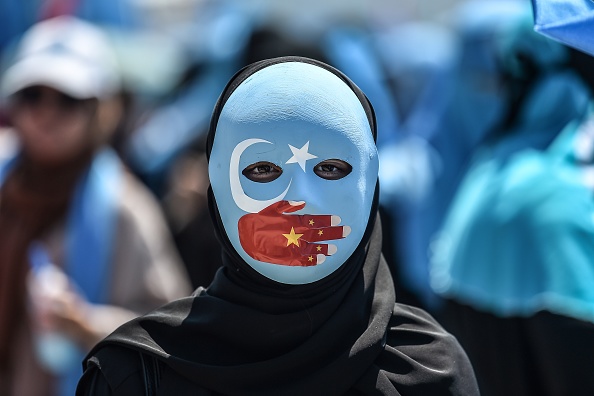
The Jump Ball  “Fight for freedom, Stand with Hong Kong.” This one short, now-deleted tweet from Rockets General Manager Daryl Morey on Oct. 4th kicked off a media firestorm for the NBA. They’ve had several key moments to show their true stance on tolerance in the weeks that followed, but they’ve completely missed the net. They’re still trying to play defense, and that’s part of why it’s the perfect choice for New Tolerance’s first campaign.  The Full Court Press  First a little background. China is a huge source of income for the NBA, and teams regularly make the international trip to cash in on the Chinese fan base. However, China’s communist government is under fire for serious human rights violations. They have been violently quelling peaceful protests in Hong Kong, as Morey’s tweet referenced. More chillingly, the government is detaining, torturing, and even reportedly harvesting organs from innocent Uyghur Muslims and other minorities in internment camps. Google “Uyghurs” if you haven’t heard about this, but prepare to be horrified.  That brings us back to the NBA. China was not happy about Morey’s tweet, and they demanded that the NBA fire him. Instead, the NBA made him delete the tweet. Last season’s Most Valuable Player, Rocket’s James Harden, actually apologized to China. Lebron James issued a strong defense of the league. And the politically outspoken Steve Kerr took the “aw shucks” route. But countless fans nevertheless became, and remain, outraged. The NBA and the players involved in the spat have backtracked in many ways and continue to issue statements, but they are clearly prioritizing their profits over their values.  What’s Fair   Another round of backlash started when fans brought signs that read “Google Uyghurs” and “Free Hong Kong” to games and held them up for the cameras. In both cases, venue staff confiscated the signs, claiming that they violated venue sign policy.  Here’s the thing: while we applaud those fans for raising awareness of important issues, the venues have rules saying that all signs must be relevant to the event and cannot include political messages. As far as well can tell, these policies have been uniformly applied. Therefore, the confiscation of the signs is justifiable.  While there may be some quibbling over the definition of “political” or the exact way the venues handled the confiscations, this is a fairly clear standard that is widely adopted in this line of business, and it makes sense that venues want to keep 100% of the focus on their events.   What’s Foul  In 2016, North Carolina passed a highly controversial bill that made transgender bathroom use illegal, even at private businesses, and added other provisions that many argued were discriminatory against the LGBTQ community. The state government got slammed with bad press, and the NBA piled on, declaring that they would no longer host their 2017 All-Star Game in the state as previously planned. NBA Commissioner Adam Silver made a statement claiming that the decision was being guided “by long-standing values of our league” that included “not only diversity, inclusion, fairness and respect for others but also the willingness to listen and consider opposing points of view.” A number of the league’s stars supported the decision.   Agree or disagree with this particular issue, the NBA is a private organization, and they can set their own standards. The problem is that they haven’t been consistent. China is literally imprisoning and torturing people over their religions and ethnicities. You can’t get much worse on “diversity, inclusion, fairness, and respect” than that.  We don’t begrudge any private entity their need to be profitable, but this double standard leaves North Carolinians feeling singled out, victims in China feeling hopelessly ignored, and fans wondering where the league really stands.   It’s critical for American organizations like the NBA that voluntarily act as arbiters of values and standards of tolerance to be clear and consistent in enforcing them because of the impact they have with those decisions on our broader society. That’s why we’re calling on the NBA to do better. For the record, after North Carolina eventually softened its bill, the NBA agreed to host the 2019 All-Star Game in Charlotte. We would hope, and we certainly expect, that the NBA would take a similar approach with regards to China. Doing so would, after all, be consistent with the NBA’s stated values and its actions regarding North Carolina.  Please join us in contacting the NBA and demanding a clear standard! 

Scroll to Top