
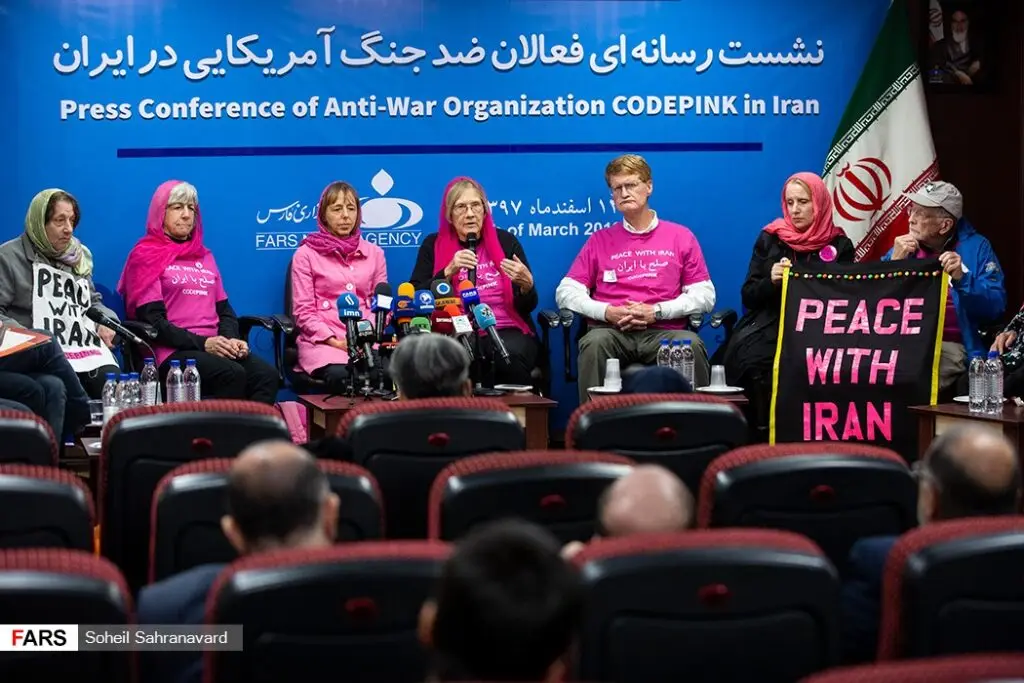
CODEPINK’s Cuba Trip Exposes the Left’s Favorite Double Standard
Champagne Socialists in Havana At a moment when ordinary Cubans are enduring rolling blackouts, food shortages, and a collapsing infrastructure, the activists of CODEPINK decided it was the perfect time for a “solidarity” trip to Havana. What followed was not solidarity—it was a complete spectacle. Reports from the trip reveal a jarring contradiction: while everyday Cubans ration electricity and struggle to access basic necessities, members of CODEPINK and their allies stayed in upscale hotels, complete with generator-backed electricity shielded from the very crisis they claim to highlight. Beyond accommodations, the optics extended to personal appearance. Photos and coverage from the trip show some participants and affiliated supporters wearing high-end, designer-style clothing—an uncomfortable contrast against the backdrop of a country where many citizens are struggling to access basic goods. This is not a minor oversight—it has rightfully become the entire story. Solidarity for Thee, Comfort for Me There is something deeply revealing about activists who claim to stand with the oppressed… so long as they don’t have to live like them. Cuba is not experiencing a mild inconvenience. The communist nation has been hit with widespread power outages, severe economic contraction, and major shortages of food and medicine. Families are navigating daily life without reliable electricity, hospitals are strained, and basic services are inconsistent or nonexistent at best. And into this reality steps CODEPINK, staging music and mural painting events, documenting their journey, and promoting their cause, all while staying insulated from the actual hardship. If solidarity means anything, it requires proximity to truth. What CODEPINK demonstrated instead was proximity to privilege. A One-Sided Moral Lens Throughout the trip, CODEPINK’s messaging remained predictable: blame the United States, oppose President Trump and Secretary of State Marco Rubio. The U.S. embargo, they argue, is the central cause of Cuba’s suffering. That claim is repeated endlessly, often with moral certainty and zero nuance. What’s missing is just as telling. There is no serious reckoning with the Cuban government’s role in the country’s economic dysfunction. No sustained criticism of a regime that tightly controls markets, restricts political freedoms, and manages the very distribution systems through which aid flows. In CODEPINK’s worldview, accountability appears to travel in only one direction as their own home country (the United States) is scrutinized relentlessly. They treat the Cuban regime as if they’re a passive victim which is not analytical in anyway, rather its full of nothing less of ideology. Selective Outrage Is Not A Principle CODEPINK brands itself as anti-war, anti-imperialist, and committed to justice, but those principles seem to depend heavily on geography. When it comes to the United States or its allies, the rhetoric is absolute. When it comes to regimes aligned against the U.S., the tone softens or disappears entirely. Cuba is not unique in this regard. It is simply the latest example of a broader pattern: outrage deployed selectively, criticism applied inconsistently, and moral clarity reserved for only one side of the equation. This is not a movement guided by universal values, rather it’s a movement guided by preferred targets. Turning Crisis Into Content Perhaps the most distasteful element of the CODEPINK’s entire trip was the way it blurred the line between humanitarian concern and political theater. Concerts were staged. Twitch streamers were highlighted. A copious amount of content was produced for the internet. The entire trip became a stream of social media moments and activist branding exercises. All of it unfolding against the backdrop of a country full of children and families in genuine distress. There is a difference between raising awareness and exploiting a crisis to advance a narrative, and CODEPINK’s trip often felt like the latter. Cuba became less a place of suffering to be understood and more a backdrop to be used. Where Does The Aid Actually Go? CODEPINK has emphasized that their trip included humanitarian aid which seems like a positive moment for people in desperate times, however, it raises an unavoidable questions: How was that aid distributed? Who was it distributed to? How far spread was the aid? Where and what future aid can be sent to further assist these people? In Cuba, the state maintains tight control over supply chains and distribution networks. Without transparency, there is no guarantee that aid reaches those most in need rather than being absorbed into government systems. Yet this concern is largely absent from CODEPINK’s messaging. Again, scrutiny flows one way. The Bigger Picture CODEPINK has been a registered 501(c)(3) organization since April 2009 and has amassed nearly five million dollars in revenue over the last five calendar years. This latest controversy of theirs surrounding the Cuba trip is not just about optics, but it’s also about their credibility. When activists claim moral authority, they invite scrutiny. When their own actions contradict their organization’s rhetoric, they undermine the very causes they claim to champion. CODEPINK’s Cuba trip encapsulates a broader problem in modern activism: the gap between what is said and what is done, between the standards imposed on others and the standards applied to oneself. If the goal was to highlight injustice, the trip succeeded—just not in the way CODEPINK intended. This trip revealed a movement more comfortable with narrative than reality, more committed to ideology than consistency, and more interested in performance than principle.